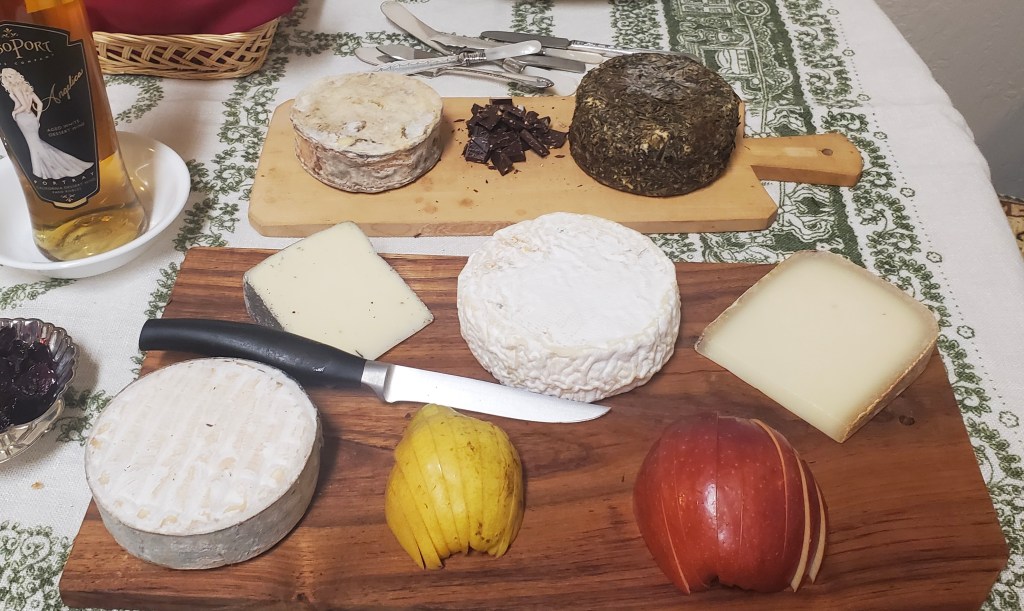
It’s the time of year for rich foods and lavish spreads–and that means cheese! In this episode, we talk about the special properties of winter milk and what that means for late-season cheesemaking. And then how to choose cheeses for a memorable holiday cheese board.
Washed rind cheeses are popular across Northern and Eastern Europe, but their reputation for stinkiness had dire implications for their popularity in late-Victorian North America–and for North American cheesemaking as a whole!
“Natural Rinds” is a big banner, encompassing a wide range of semi-firm to hard cheeses–everything from Asiago, Beaufort and Cheddar to Pecorino, Roncal and Tomme. Here we talk about what goes on inside the rind, and why it matters what’s on it.
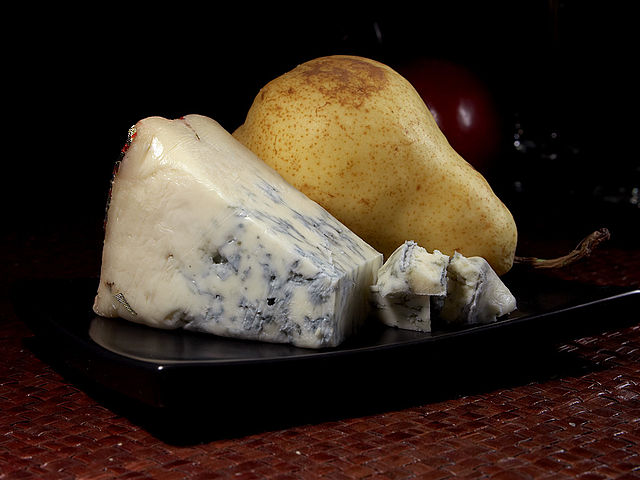
Blue cheese is one of the more mysterious and divisive types of cheeses. There are many myths about it, and often people have had one unpleasant blue and are never tempted to try another. But blues can have a wide range of intensity, different textures, and secondary flavors ranging from apple and pear to nuts and cedar. In this episode we start exploring this very diverse group of cheeses.
In the name of research for Episode 8 on blue cheeses, I recently organized a blue tasting.
We had three tasters: someone who likes cheddars and blues; someone mostly likes softer, younger cheeses but likes the occasional blue (but has a vendetta against Roquefort); and me, who likes a range of cheeses, but not usually blues.
I picked out six cheeses representing a range of styles:
Blue lovers will notice a distinct lack of Gorgonzola in the list. It’s simply because that’s the one blue cheese we typically get in our house. Around the holidays, Whole Foods sometimes has a Gorgonzola Cremificata, so soft that they dig it out of the wheel with an ice cream scoop and put it in a deli container. It’s wonderfully creamy, a bit salty, and has a moderate but not overwhelming blue flavor. The two main styles of Gorgonzola are both a bit older. You can see them both here.
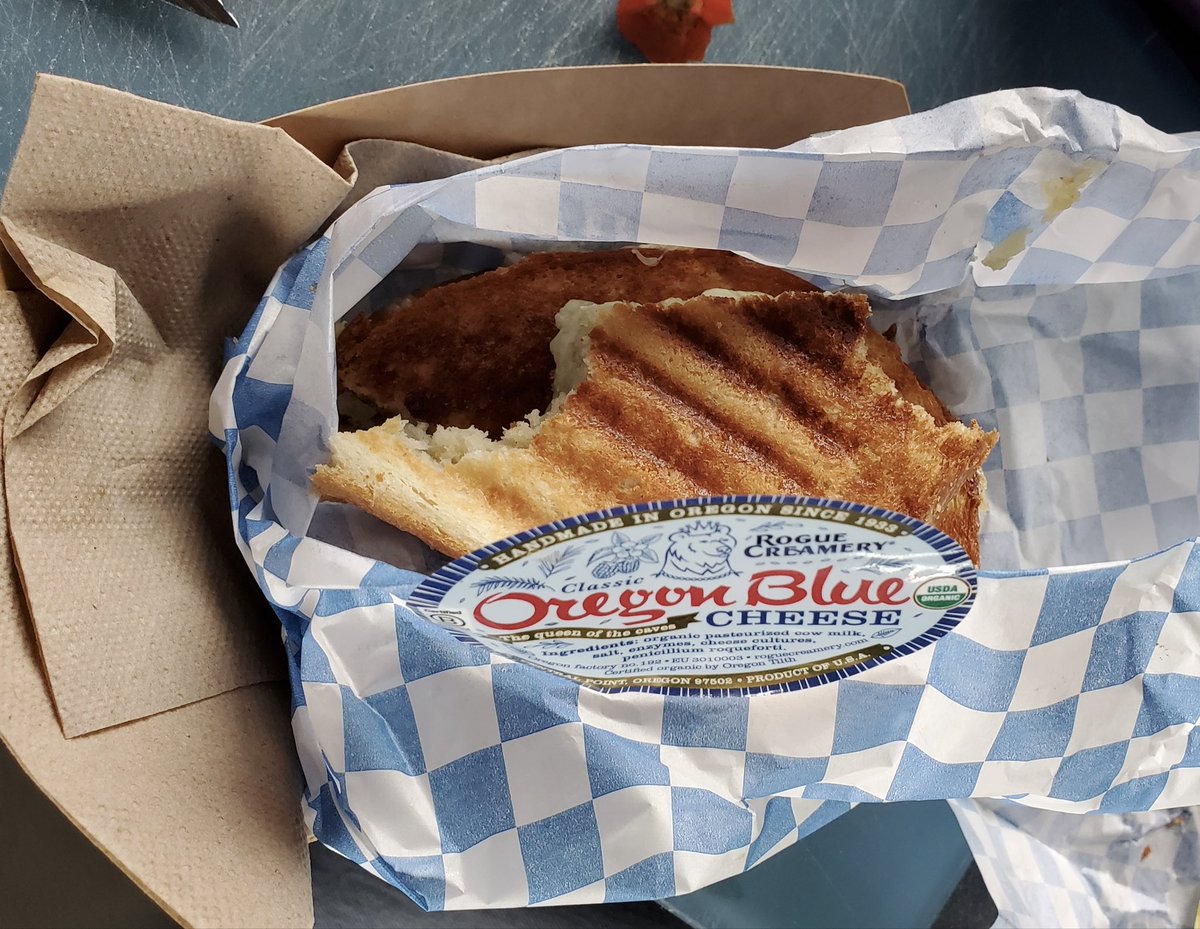
I must also mention the family of Rogue Creamery blues. Rogue Creamery is in Oregon, and their cheese shop is just off of I-5 if you happen to be passing through the state. They also sell grilled cheese sandwiches there. 😄 They have fairly wide distribution through Whole Foods and higher-end cheese shops, and sell online.
They’re best known for their large, leaf-wrapped Rogue River Blue, though my personal favorite is a milder blue smoked over hazelnut shells (“Smoky Blue”).
Blue cheeses pair well with dark chocolate, pears, red fruits, toasted nuts and dessert wines. The 10 Year white port we found when visiting Porto in May was divine with all of the cheeses! (The producer, Vasques de Cavalho, has been growing grapes for port for several generations, but started their own label only recently. They’re still fairly small, though easily our favorite of the producers we visited.)
Over on Twitter, a couple of folks commented on how little the slices seemed to cost. I had gotten very small slices, just enough for a couple of bites of each for each of the three of us. When you have 4-6 cheeses, that’s really all you want–cheese is rich and filling, and the especially with a plate with all the same genre of cheese, it’s easy to get palate fatigue. So for ~US$10–less than a Starbucks per person–we were all completely satisfied.
So: the evening’s cheeses <drumroll>:
The Jasper Hill is a nice mild cheese, but not much blue flavor or other noteworthy elements.
The Cambozola appealed to those of us who like softer cheeses. It’s a newer German cheese that blends the techniques for Camembert and Gorgonzola. The blue flavor was more of a hint than the main event, which may be a good or a bad thing, depending on your tastes. It definitely leaned more towards the Camembert, with a great, unctuous mouthfeel and butter flavor.
The English Stilton and the Point Reyes blue were the next pair. The Stilton was still not blue enough for the blue lover, but the anti-Roquefortian thought it was just right. She and I both appreciated that it still tasted creamy, even being a drier cheese. The Pt Reyes is supposed to be a Stilton-style as well. To my taste it’s fairly salty, with a crumbly texture. It was a bit more brittle than the English Stilton, with a stronger Blue flavor.
#5 was a French Fourme d’Ambert. It’s softer in texture than the Stiltons, but very salty with a very strong blue flavor. The blue lover was a fan, the rest of us not so much.
This was a blind tasting, but Ms Anti-Roquefort kept trying to identify the Roquefort in order to feel vindicated in her hatred. She had decided it must be #5 and #6, and was trying to decide which was more terrible in order to identify the Roquefort.
#6 was a very soft, creamy cheese, with medium salt and medium blueness, a bit of sweet roundness. I liked this one a lot, finding it very nicely balanced. The blue lover preferred Pt Reyes and Fourme d’Ambert. Ms Anti-Roquefort still liked Cambozola and Stilton best, but found #6 quite acceptable.
Here’s a lovely video about how traditional Camembert is made, which very nicely illustrates a number of the things I talk abt in Episode 7.
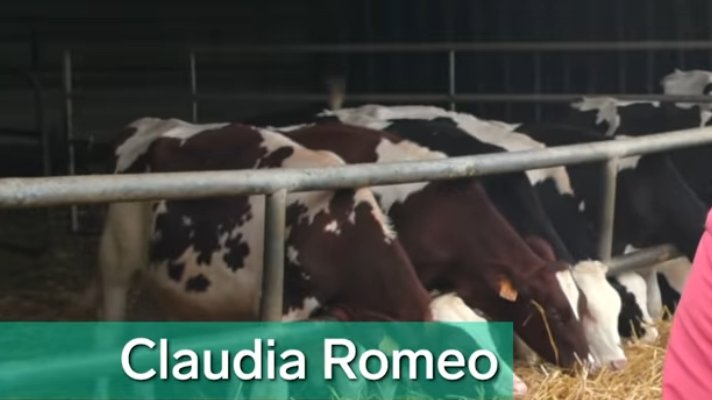
One thing I didn’t specifically mention is that as with many cheeses, the AOP version must be made with milk from a specific breed, in this case the Normande cow. You can see some in the background at :13: mostly white with dark red splotches.
The Normande breed produces high protein, high fat milk–4.4% fat on average, vs 3.25-3.5% from the typical Holstein.
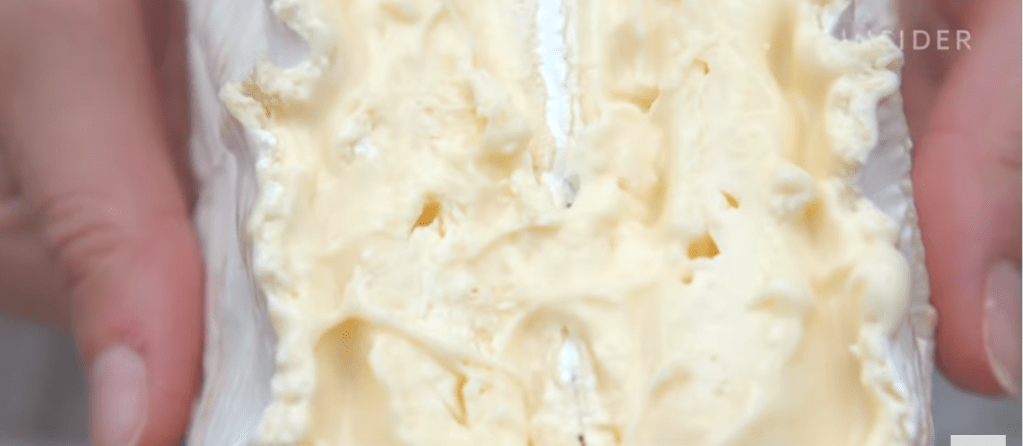
At 1:17 we get our first glimpse of the interior of a traditionally made bloomy rind. Unlike the stabilized paste cheeses typically available in supermarket, the texture is not even throughout the cheese. That’s because it ripens from the outside in.
At 1:35 the maker talks about the “croûte fleurie” of the cheese. That literally means “flowering crust”, referring to the fruiting of the geotrichum & penicilllium fungi on the rind. The slightly more indirect translation in English is “bloomy rind”.
Fun side fact for those who don’t speak French: that little “hat” mark over the U in croûte is called a circumflex, and it marks where there USED to be an S, which at some point stopped being pronounced in French, and then much later orthography caught up with pronunciation. We often have the same word, with the S, both in writing and in speech, in English: croûte = crouste = crust.
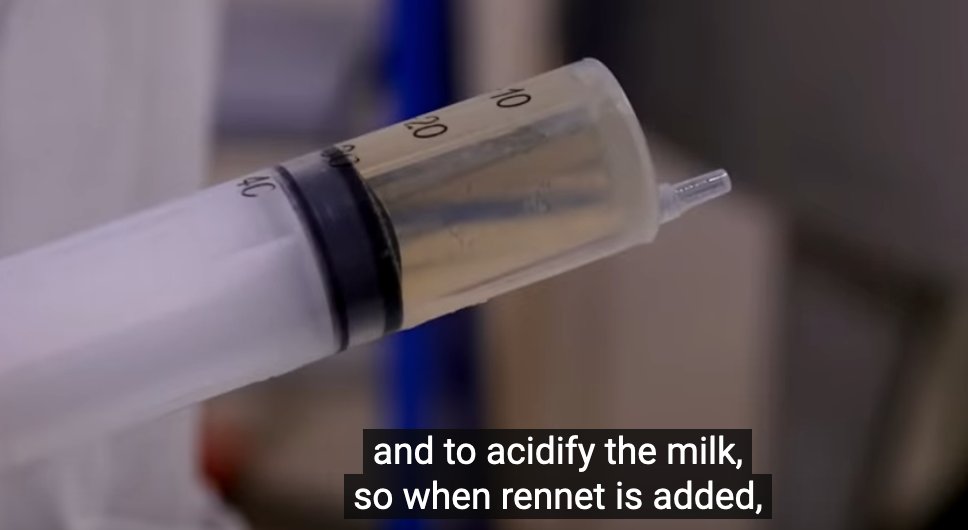
In the podcast I mentioned that most of these bloomies were originally farmhouse cheeses, things that didn’t require a lot of hands-on work that would tie down the farmwife (typically) as she ran around taking care of all of the OTHER business of running a farm & household. So a lot of these cheeses are traditionally made from raw milk that’s just left to sit around and acidify on its own for 12-24 hours. (Longer if it’s cooler, less time if it’s warmer.)
Discussion of acidification process above
Some bloomies are entirely lactic set with very little rennet–many of the goat cheeses, and also Brie de Melun. Others, including most other types of Brie and also Camembert, get more rennet added (as at 2:29) for a bit more structure to the curd.
Note that the raw milk is never heated: it just comes out of the animal and is left to sit in buckets or forms as it acidifies. The French often categorize cheese by dividing them into “cooked” and “uncooked” cheeses for this reason, and then “pressed” and “unpressed”.
At 2:32 we see the curd being cut into quite large chunks. This allows the curd to retain a lot of liquid, which will help it break down quickly over a few weeks.
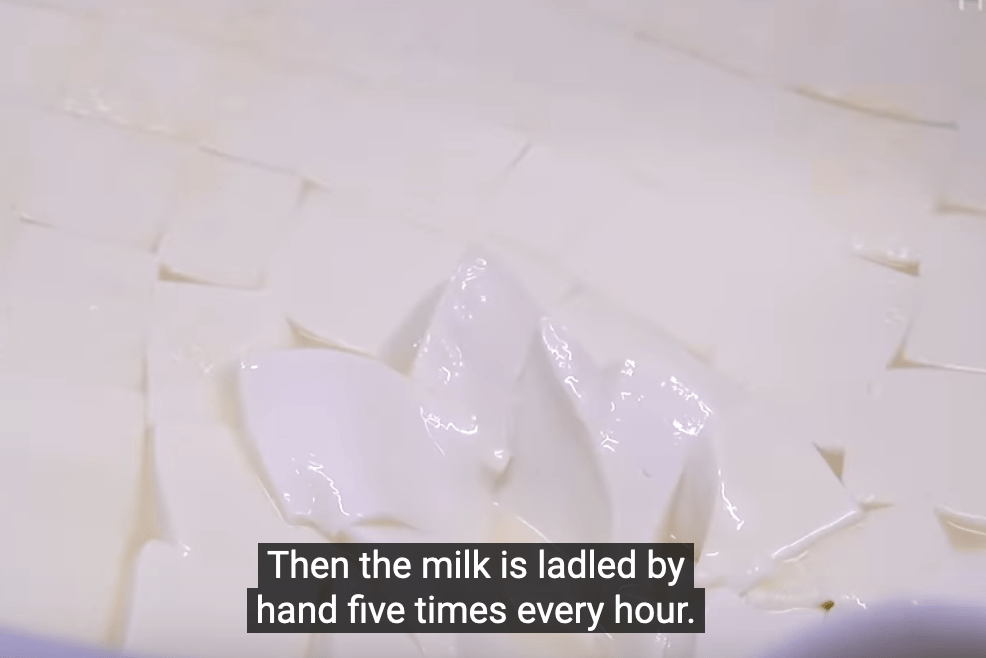
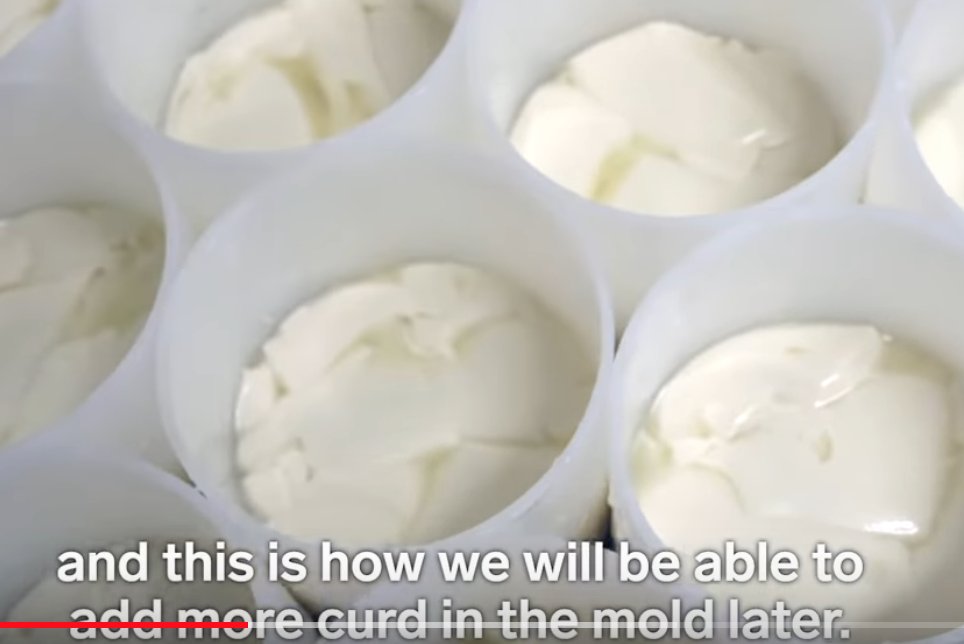
The curd is barely stirred, if at all, so it hardly retains its shape as it gets ladled into molds. As the maker notes at 2:42, each layer of ladling (one ladle per hour into each mold) condenses from a full mold into a thin layer over an hour, as the fragile curd blocks quickly collapse. Camembert molds are simply round cylinders with holes on the sides and no bottom. The whole goal is to allow the whey to drain out without any impedance.
Here you can see the curds collapsing and flattening as they shrink down into the mold.
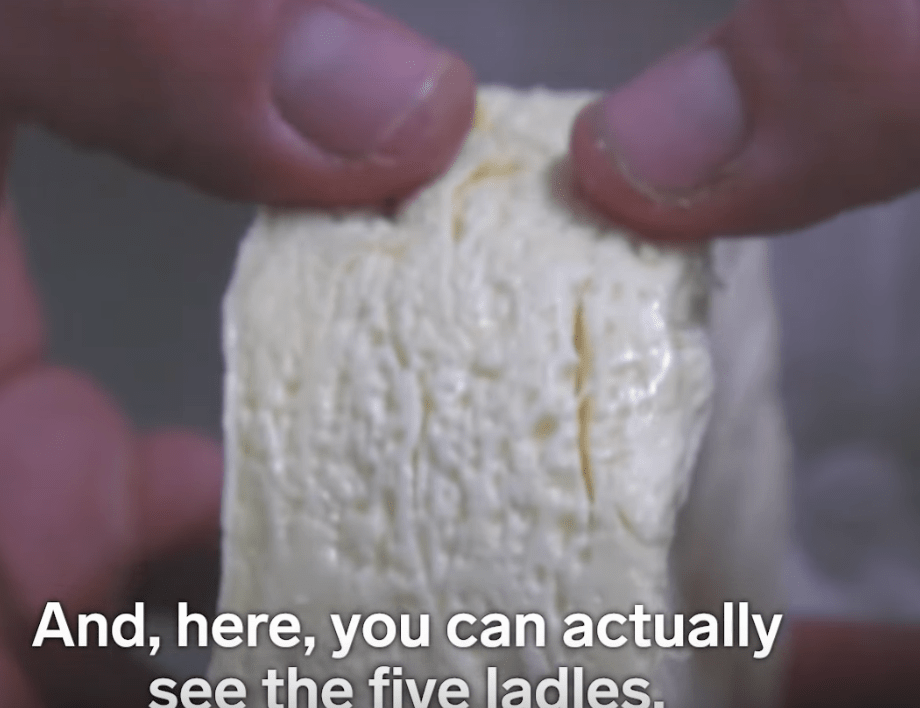
In case you’re wondering, yes, a little bit of a skin does develop on the top of each layer during the hour between ladlings, as the top portion, exposed to the air, dries out a bit. At 3:33, the maker pulls on the sides of a day-old cheese to show how the layers can be seen. The cheese is unpressed other than with the weight of new curds being added on top of others, so they aren’t tightly knit together.
At this point it should become clear that this approach, while wonderfully low-key from the point of view of someone with a million other things to do in a day–18-24 hours to acidify, another 30-45 minutes to coagulate, 5 hours to mold, just stopping by every now and then and then going on about other business–is completely antithetical to mass production, where high throughput is king. So mass-market cheeses are made with lots of added cultures to jumpstart acidification; the molding/draining process is also done at a warmer temperature, so curds drain faster. It’s the opposite of “low ‘n slow”.
Around 3:45 they talk about the aging time, 4-5 weeks, which allows the fuzzy white molds (fungi, really) to grow in on the surface and then work their way into the curd. Here you can see cheeses a week or so old, when the rind is just partially grown in. It comes in patchily at first, then starts to spread until you get a fairly even coat.
The maker mentions at 3:57 that they add geotrichum and penicillium. Sometimes freeze-dried spores are added to the milk as it’s acidifying; in other cases, especially large productions, they can be added to brine that is sprayed on the surface of the cheese after it’s made. Because there’s less of the fungi active in the curd, this enables the producer to have a nice traditional-LOOKING cheese, but less outside-in aging, which would produce a less even texture.
Towards the end of Ep 7 I talk about how to select a cheese in the supermarket. One thing to look at is the evenness of the rind. Some bloomies are sold, honestly, too young, and never really soften well in your fridge. Others, especially imported ones, are often older than ideal. You can decide for yourself what the sweet spot for you is, depending on how quickly you eat your cheese. If it’s for a party tomorrow, buy an older one. If you just have a few slices every few days, buy a younger one.
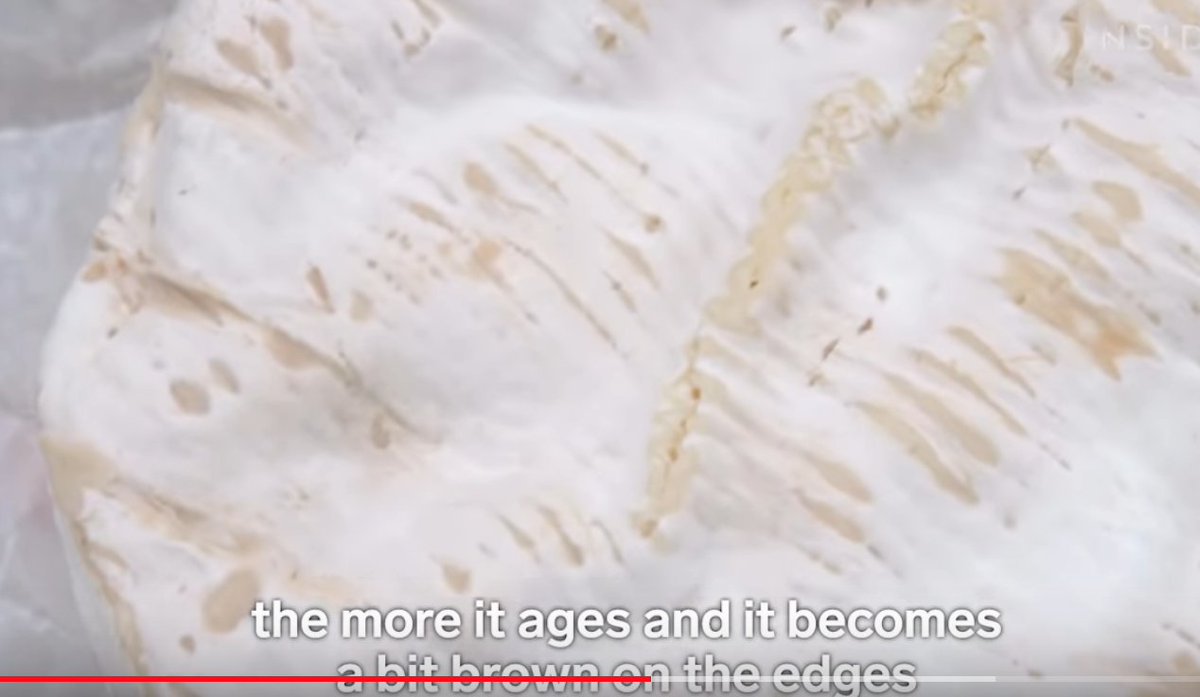
At 4:06, we see how in older cheese starts to develop “bald” spots, where a beige rind starts to show through.
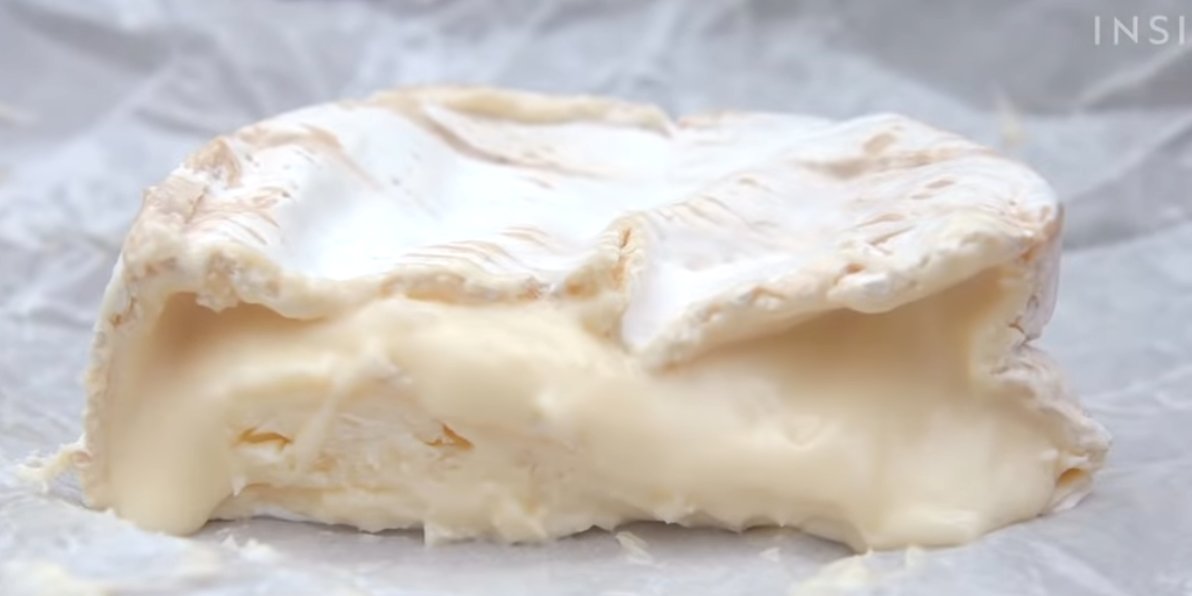
At 4:10 we get a closer look at the inside of a traditionally ripened bloomy: crust about the texture of wet cardboard, oozing paste just inside it (called the “cream line”) and then a still-firm, cakey-textured center.
This is obviously quite different from the stabilized-paste bloomies we typically get in supermarkets. I talk about how stabilized paste is different in virtually every aspect of how it’s made towards the end of Ep 7.
So if you see something with these multiple textures, you’re getting a cheese made fairly traditionally–but you’ll want to eat it quickly. If it’s uniformly firm, with no “squish”, it’s a stabilized-paste and either extremely young, or one of the brands that never really softens.
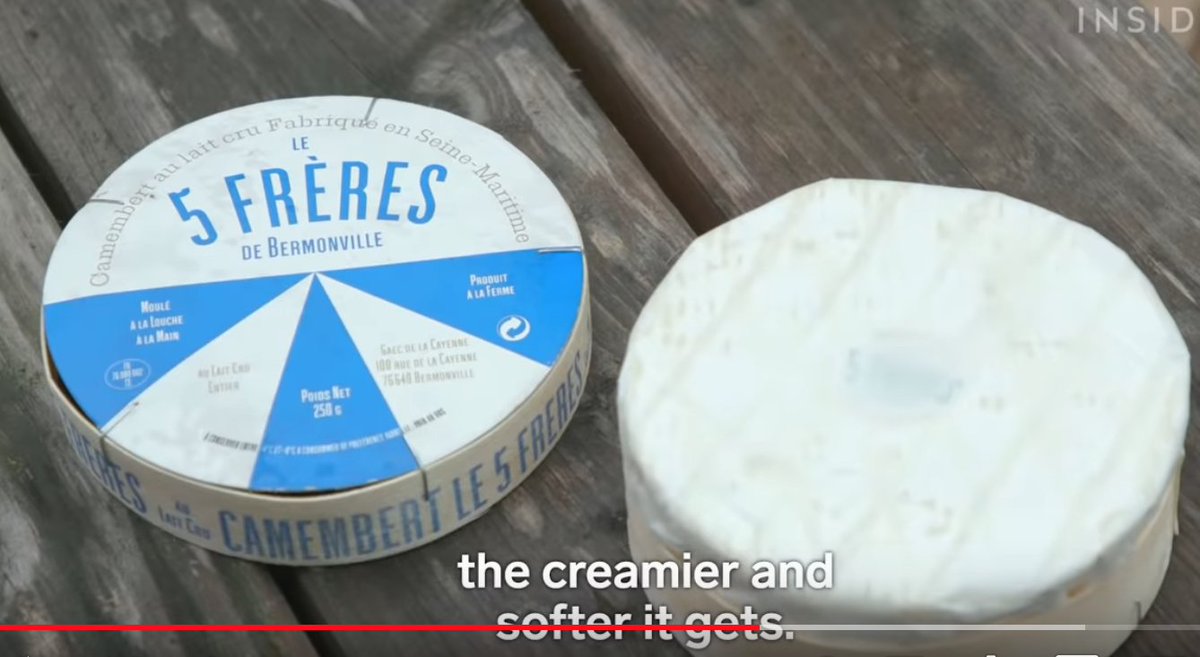
Around 4:33 the maker talks about the traditional wooden box in which Camemberts are often sold: it helps the cheese keep its shape as it softens and ages, and protects it from getting squished during transport.
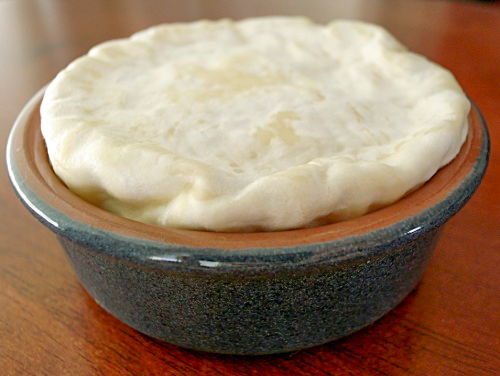
A number of soft-ripening cheeses are packaged this way, in fact…St Marcellin, a bloomy with a very thin rind, is often packed in small ceramic pots because it gets runny so easily.
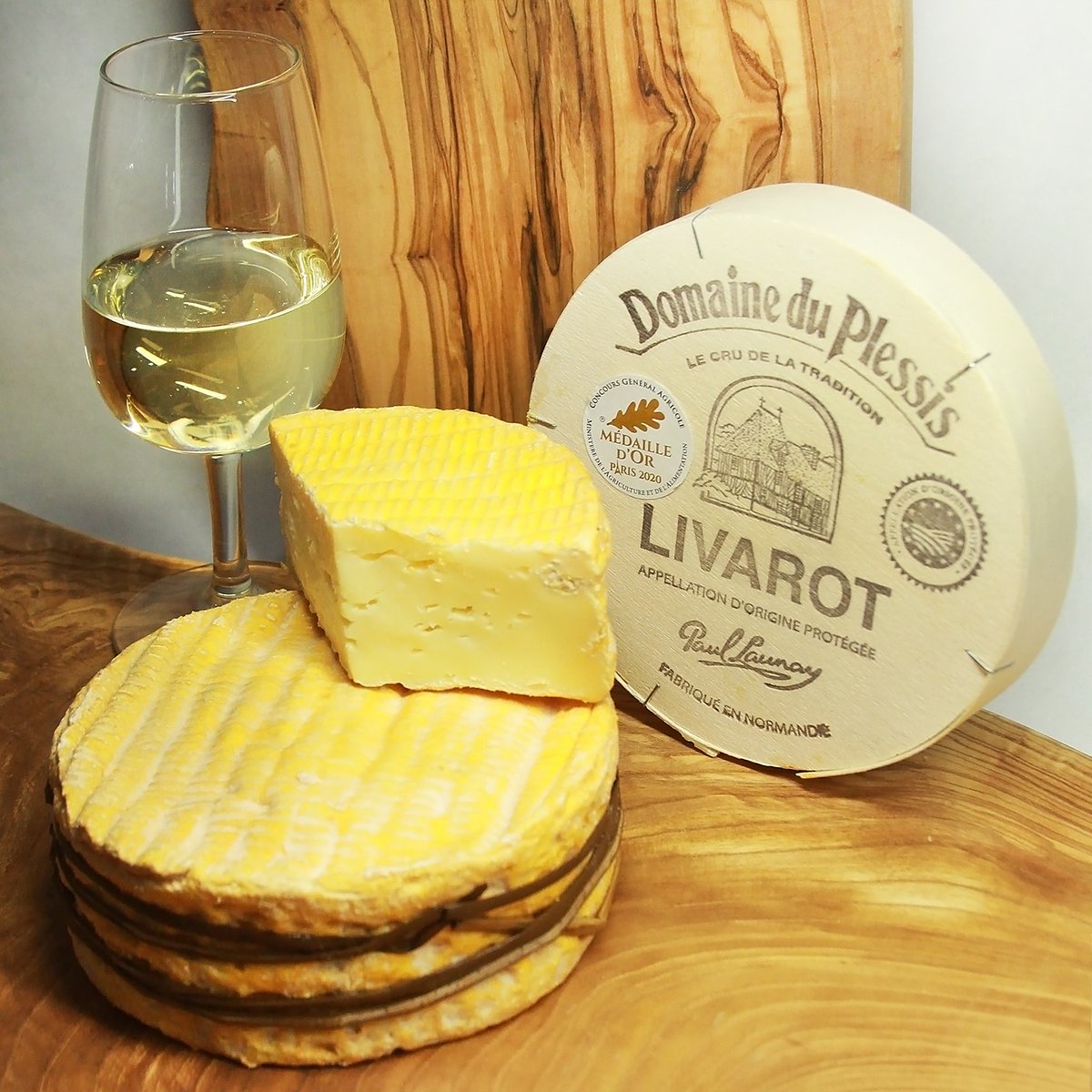
Livarot, another Norman cheese (washed rind, not bloomy) that’s probably older than Camembert, is taller and traditionally tied twice around with raffia to help it hold its shape.
Around 7:11 they mention that most of the Camembert made today is made with pasteurized milk. Only ~10% of Camemberts are made the way we’ve just seen, with raw milk. Because of the very long production time for the traditional approach the AOP label is extremely important commercially for small, traditional producers–it allows them to differentiate their product and maintain a price premium that allows them to stay out of the red financially.
The label, however, is a subject of much controversy, as the government has broadened the label in different ways several times. Here’s a discussion of one of the more recent contretemps…which, because it’s France, led to protests that included traditional Camembert cheeses being dropped in MPs’ letterboxes.
All of this is neither here nor there for those of us in the US, since 4-5 week old, raw milk cheese can’t be imported here. But if you’re touring around France, enjoying Euro-dollar parity, you may wish to look for “fermier” on the label in a proper cheese shop to get the full flavor experience of a traditionally made Camembert.
Brie shows up on pretty much every catered cheese board because it’s usually mild and has a nice mouthfeel. But there’s more than Brie in the world of fuzzy-rinded cheeses! Start venturing off the beaten track–whether with a triple-cream Brillat-Savarin or a goaty Valençay. Learn how to choose a good one–not too young, not too old–and how to serve it.
There’s a tongue-twister in English about “Theophilus Thistle”, or as I pictured it as a child, “The Awfulest Thistle”:
If Theophilus Thistle, the successful thistle sifter,
In sifting a sieve full of unsifted thistles,
Thrust three thousand thistles through the thick of his thumb.
See that thou, in sifting a sieve full of unsifted thistles,
Thrust NOT three thousand thistles through the thick of THY thumb.
It kept coming to mind as I toured Portugal last month, since the Portuguese have a special fondness for using thistle rennet in their cheeses. (I talk a lot more about this in Episode 6.) They’re not the only people to do so, though: their neighbors in western and northern Spain often do as well. The rennet can be made with the purple stamens of the flowering thistle, but the leaves of some plants also contain the same protein-metabolizing enzymes. And these have an effect on a very different cheese made far to the north of Iberia: Cornish Yarg.
Yarg is not common on North American cheese counters, but it’s a somewhat famous oddity in the cheese world due to being wrapped in nettle leaves
Bit of Cornish Yarg today. Lovely crumbly texture, earthy aroma with plant notes. Super example of l'âme du fromage showing. pic.twitter.com/GLACaVa1ic
Nettles themselves aren’t a common food in North America, but have been used much like other leafy vegetables all over Europe for thousands of years. They happily grow wild in many places that are difficult to farm, which has been important for people living on marginal lands.
In such places, where plant cultivation is minimal, livestock agriculture is key to subsistence. And in most subtropical regions of the northern hemisphere, that also means a diet heavy in dairy and cheese, as those are more renewable sources of protein than meat.
How useful, then, that nettles and thistles can also coagulate milk! No need to kill very young animals that don’t have much meat on them and then have to cure their stomachs while (in some regions) following your herds in a foraging circuit, with no fixed house or barn. Unlike animal rennet, plant rennets are relatively easy to make at need and don’t require long-term storage.
But you’ll often see comments about plant rennets making cheese bitter as they age. And it’s true that plant-rennet cheeses today are most commonly found in traditionally hardscrabble regions, cuz who would want to eat bitter cheese if they didn’t have to?
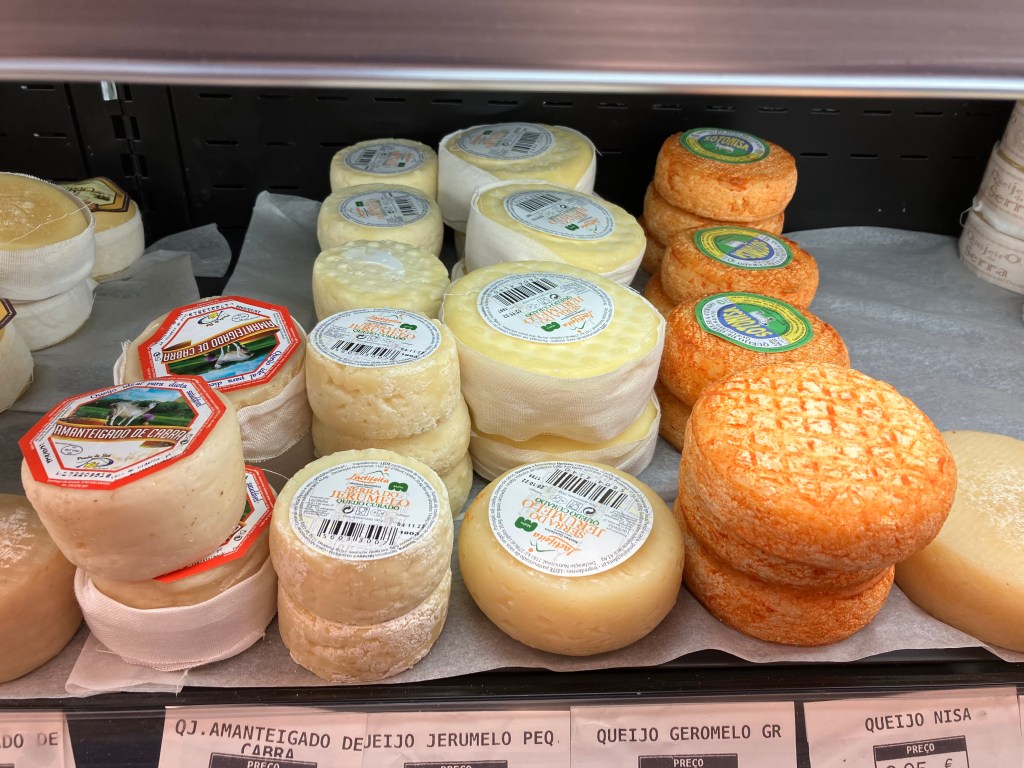
But this bitterness claim didn’t exactly jibe with what I found in actually eating a range of Portuguese cheeses last month, virtually all of which are made with cardoon rennet. No bitterness even in the harder ones. So is this bitterness trope just a snobbish old wives tale?
Upon further digging I found the key to the “bitterness” claim lies in the type of milk used: in Ep 4 I talked a bit about how milk from different species are structurally different. The range of flavors that cheeses develop as they age is a byproduct of the breakdown of the fats and especially proteins in the milk. And in Iberia, especially in the places fond of using cardoon rennet, they mostly make sheep and goat cheeses.
I’m going to get gross here for a minute. You know how different people in your family have different- smelling farts even though you all eat the same food? It’s because each of you has your own unique set of gut bacteria, which break down your food in slightly different ways. Each metabolizes different parts of the compounds in your food, some more efficiently than others, and with different byproducts as a result. Same thing with the cultures and rennet in your cheese. Cow milk in particular often contains more long-chain proteins than sheep or goat and its proteins can produce a set of bitter peptides under the influence of cardoon (thistle) rennet, while sheep and goat milk do not.
In Ep 2 I talked a little bit about rennets, about how in mammal stomachs we have two major enzymes, chymosin and pepsin, that do the first-pass food breakdown. With animal rennet, the source animal is slaughtered when the ratio is mostly chymosin. Pepsin is a much stronger enzyme that comes to the fore as the animal starts to consume solid food.
Plant rennets have no chymosin, and unlike animal rennets, which exhaust themselves fairly quickly, leaving most of the long-term aging to the remaining cultures, plant rennets keep going and going…
So you get faster, more aggressive proteolysis, or protein breakdown, with plant rennets.
But back to yarg: although it’s typically made with cow milk and animal or microbial rennet, it’s often soft and creamy on the outside, directly under the leaf wrapping, and firmer/crumbly in the interior. That’s because the nettle leaves are breaking down the part of the cheese they’re in direct contact with, faster than the enzymes present in the rest of the cheese.
I thought I’d add a pointer to US-made nettle cheese I had the pleasure of meeting a few years ago: “Nettlesome” from Valley Shepherd Creamery in New Jersey. Although they’re primarily a sheep farm, this particular cheese is a Gouda-style cow milk cheese. Finely minced nettles are mixed into the curds, giving it a slightly vegetal flavor and just a bit lip-tingly experience. I’d suggest pairing it with a dry cider, like Stella Artois. The carbonation and fructose balance out the nettly-ness.
It’s sold in certain specialist cheese shops (we found it in the store at Cowgirl Creamery), but they also sell direct–you can order from them online.
Portugal has a somewhat unique cheesemaking culture, heavily centered around sheep milk and thistle rennet. The unusual properties of each work together as if they were made for each other–and produce cheeses with a focus on the inherent flavors of the milk and juxtapositions of texture.




 Into The Curdverse