Aging Gracefully

I have a real dislike of the phrase “aged like milk” when used to indicate something aged poorly. Because aging milk is what produces interesting, complex cheese. Not all cheeses are aged, of course, and there’s something to be said for cheeses that showcase the sweet creaminess of fresh milk and pasture. But as a means of storing complete proteins for use in times of year when fresh foods are less available, it’s hard to grow wrong with cheese.
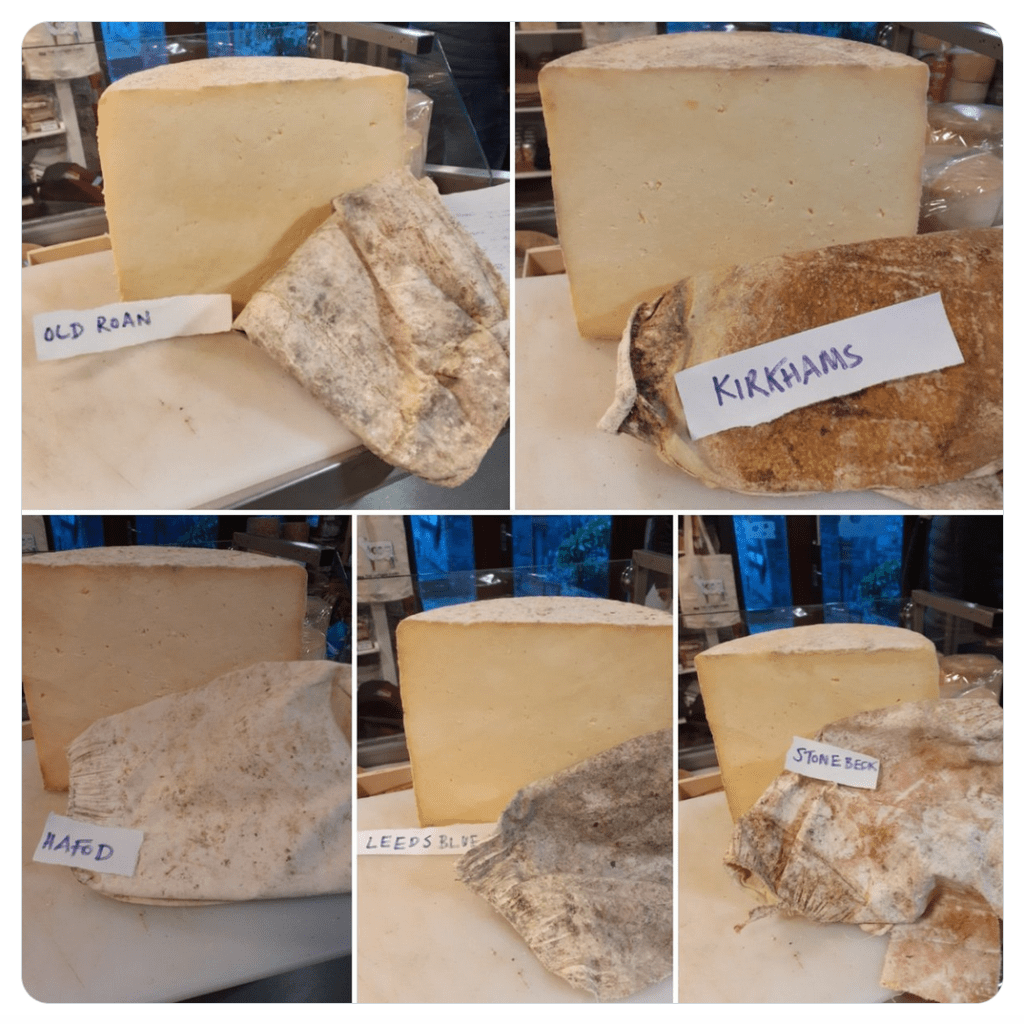
How the cheese is stored makes all the difference in the ultimate flavor of the cheese, and even its texture. Here are several cheeses, all of the same type, from the same dairy, which were sent out to several different aging facilities.

The grey/brown things in front of the cheeses are the bandage wrappings that they aged in. As you can see, in different spaces, they grew different types of molds — and some have more mold, others less.

You can read about the variations in flavor and texture between these separated-at-birth twins in this Twitter thread.

Leaving aside the cheeses that are essentially desiccated and kept away from moisture–common in the more arid regions in the world–aging a cheese is an ongoing dance of managing the microbial environment in which the cheese lives and breathes on its way to maturity. Different cheese types require different environments: some like things slightly warmer, others a bit cooler. Sometimes a cheese will spend a few weeks in a warmer space to develop certain yeasts and molds, and then move to a cooler one to allow the interior to ripen slowly. Surface-ripened cheeses such as bloomies and washed rinds tend to want more humid environments–95% humidity is common–while natural rinds do better at ~85% humidity. Temperature and humidity are two key variables that affect which microbes, yeasts and molds will be thriving in the air in the aging space, how effectively they may colonize the surface of the cheese, and even which ones will be able to develop within the curd itself.

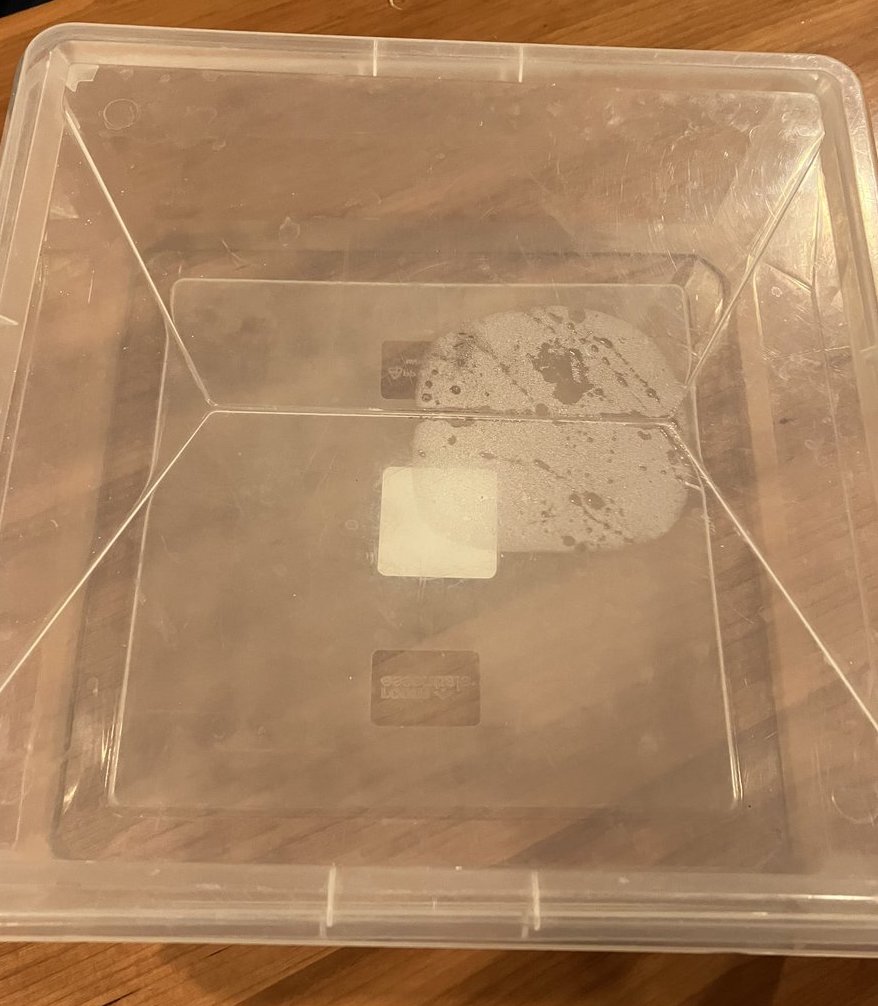
The other part of affinage–that’s the art and science of aging cheese to perfection–is hands-on human intervention. Cheeses breathe. The younger they are, the more moisture they exude. Here, for example, is a box in which a brand-new cheese had been sitting overnight, lid slightly ajar. Guess where the cheese was sitting within the box?

In this week’s Episode 15 (out on Friday), affineur Perry Wakeman talks a lot about turning cheeses, because flipping large English-type cheeses–anywhere between 10-50 pounds–is hard work. And as you can see, the side that’s facing up gives off a lot of moisture. The bottom side tries to as well, but doesn’t have the airflow that the top does–so depending on what sort of shelving it’s sitting on, the bottom side can get moldy or slimy if left too long in one place. So cheeses need to be turned regularly to ensure even moisture throughout the cheese, and an even rind. There’s quite a lot of attention paid to the rind and managing what’s growing on it, as well.
The aging space is most often referred to in European-style cheesemaking as “the cave”, because the sedentary peoples in western Eurasia have long made use of natural caves for storing and slowly aging a variety of foods: cheese, wine, olive oil, cured meats, etc. (No big surprise that these foods tend to all show up together in the cuisines of people who make them.) Natural caves offer cool, relatively consistent temperatures and high humidity, which turn out to be just the sort of conditions cheese cultures like best. Of course, there are only so many caves available, and in some regions there are more than others. And they can be homes to a variety of other non-microbial beasts as well, which tends to give modern food regulators pause. So thanks to modern refrigeration technology, plenty of affinage is done in purpose-built warehouses today.

When a cheese ages, the cultures that are in the milk are always interacting with those in the surrounding air, so that surrounding microbiome is critical. A human-built cave is somewhat easier to clean than a natural one: perhaps too easy–if you clean your cave too thoroughly, you lose the microbiome that has been built up in the cave by successive generations of the cheese that have inhabited it. But even in built caves, as Perry describes, some surprising things can happen.

The microbiome of natural caves can be exponentially more complex. I was completely sold on the natural cave effect when we visited the Cheddar Gorge in Somerset, England several years back: they usefully provide very clear-cut A/B testing. =) Cheesemaking had actually died out in the gorge in the mid 20th century, but a new creamery opened there in 2003. The gorge is pockmarked with numerous natural caves. In fact, this is the site of Gough’s Cave, where the mesolithic Cheddar Man, as well as some earlier humans, were buried, 9-14,000 years ago. (They all lived before domesticated ruminants arrived in England–no cheese for them.) When we visited in 2007, the creamery had just gotten permission to age cheese in Gough’s Cave a few months prior. And WOW. I’m not generally a huge fan of cheddar; I don’t like it sharp for the sake of sharpness, and often find it rather “one note”. But! The cave-aged cheddar is nothing like even the same creamery’s “modern-aged” cheeses, even with all other inputs being the same. It’s slightly crumbly, but still creamy, with a huge variety of flavors and just a slight sharpness at the end to cleanse the palate. There’s a nice video that shows the whole cheesemaking process they use, including what the cave-aged cheeses look like in comparison with the standard version. You see the beginning of the affinage process at 4:45, and then at 6:04 you’ll see the texture difference between the cave-aged and the “vintage” storeroom-aged versions.

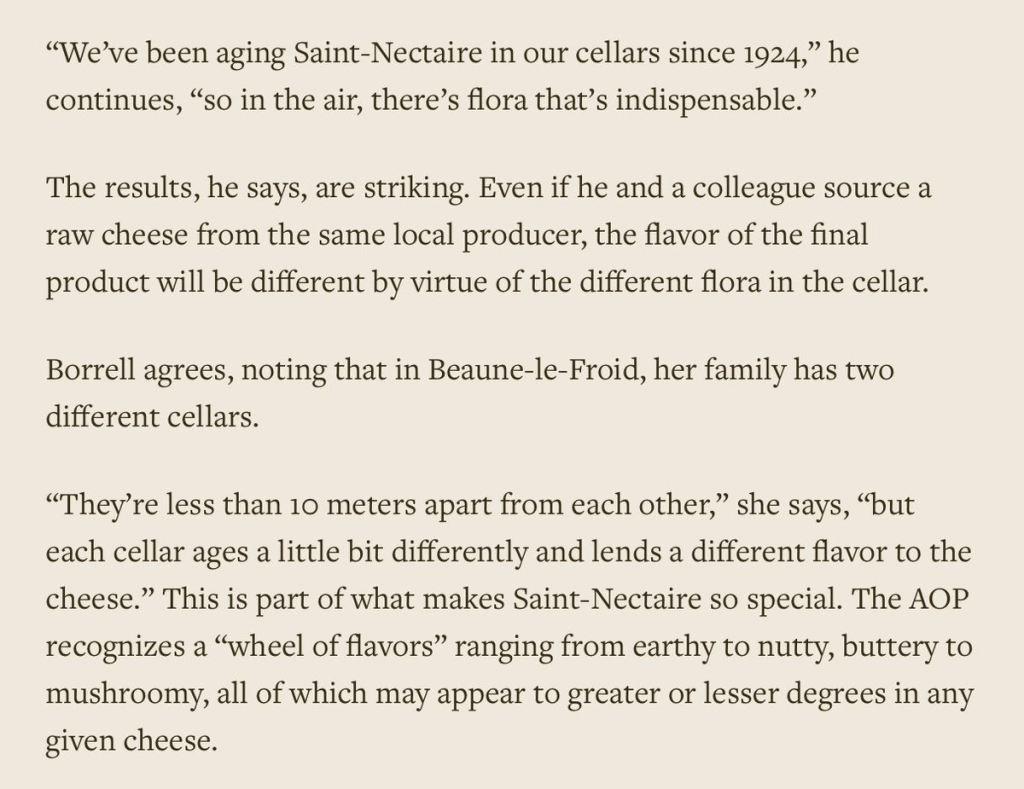
In fact, two caves in the same valley or hillside can have notably different microbiomes. Here’s an excerpt from great article about the mix of natural and artificial caves used in the production of Saint-Nectaire, a washed rind cheese from south-central France:
Another article about a cave in Transylvania (complete with a greedy count!) talks about the particular strains of B Linens native to that cave which are responsible for the particular flavors of Năsal cheese.

One of the things Perry and I got into a bit is the evolving nature of the business of affinage. Traditionally, cheese producers aged their own goods in caves or cellars they owned. This was true of small farmstead producers, as well as the large estates and abbeys who produced cheeses in large quantities. Urban cheesemongers would have appropriately cool and humid storage facilities, but expected to receive nearly finished cheeses, banking on fast turnover in order to keep their stock levels manageable. Now, affineurs are becoming important middleman businesses, both aging cheeses that they receive shortly after their production in specially optimized facilities, and acting as distributors for those cheeses.

There’s lots more to learn about affinage in Episode 15. Perry’s love of his craft is incredibly infectious, and his answer to my final question was very moving. I hope you enjoy the interview.

Leaves in Cheesemaking

Leaves of edible plants are used to wrap foods in many different cultures. In warm regions, from Central America, to SE Asia and southern India, corn husks and banana leaves wrap tamales and other meat-starch fillings and sometimes serves as plates. Slightly further north, the Chinese fill lotus leaves with sticky rice and little bits of meat & quail eggs. Further north again, variations on stuffed cabbage are common across northern Eurasia.

Western Europe is kind of an anomaly when it comes to leaves: there aren’t many dishes that use them as wrappings…except for cheese!

Since we’re entering Spring and trees are leafing out again, it seemed a good time to look at the use of leaves in cheesemaking.

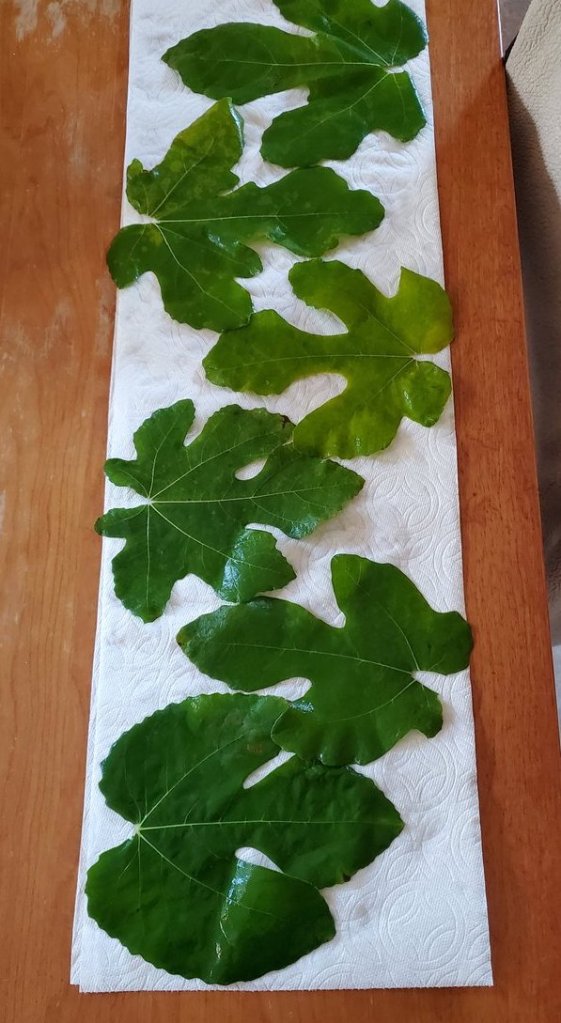
Small, soft cheeses are perhaps the cheeses most commonly aged in leaf wrappings, especially in the Mediterranean countries. Common leaf choices include chestnut, grape and fig, which are all readily available in those regions. Chestnuts are often associated with cold weather and Christmastime in English-speaking countries, and indeed they grow in a fairly wide range of climates, but they used to be everywhere in southern Europe–especially in the hills and other marginal land where goats and sheep also thrive. In early medieval Italy, some landlords even provided incentives to tenants to grow the trees, which provided a (nutritionally limited) flour alternative for those who couldn’t grow wheat, as well as bark that could be used in tanning hides. No surprise that their leaves would be a common choice for local herders.

Now, one of the reasons fig, grape and chestnut leaves are popular, besides their ubiquity in the Mediterranean, is their size: just big enough to wrap a hockey puck in one leaf. Hockey puck-sized cheeses are common in southern Europe, especially Provence, because the dry, often hilly terrain is best suited to raising goats and sheep, which give relatively small volumes of milk compared to cattle. So if you’re a small farmer without enormous herds–especially in the days before refrigeration, when you pretty much had to make cheese shortly after milking your animals each day–smaller cheeses make a lot of sense. Of course, you can also use smaller types of leaves, in which case you’ll just use several to enclose the entirety of the cheese.

One can use leaves from any type of non-toxic plant. Lemon and orange leaves are lovely. Maple is a current favorite of several New England cheesemakers. (Temperate North America was once rich in chestnut trees as well, until a blight in the early 1900s nearly wiped them out. Gastropod has a great episode on the American chestnut.) Down in the southwestern US, hoja santa (aka Mexican pepper) leaf is becoming a trendy choice. I’ve also used cherry and blackberry leaves.

Smaller cheeses will dry out faster than larger ones, which is why many are eaten young, around 2-3 weeks old. With a small cheese, you obviously don’t want to wind up with more rind than paste, so aging it means balancing just enough time to develop flavor while avoiding dryness or mold development. That’s where the leaves come in: they help keep the cheese in its own moist little bubble as it ages, so no rind forms. And since the leaves are usually soaked in alcohol, molds don’t have hospitable surfaces to grow on.

Larger, longer-aged cheeses often have natural rinds, but there are also larger cheeses that are wrapped in several larger leaves, like the award-winning Rogue River Blue (grape leaves), its Spanish counterpart Valdeon (maple or chestnut), and Cornish Yarg, coated in nettles (more on nettles in a minute).

The way you use the leaves is to steam or blanche them a bit, then plunge them into ice water. This softens the more rigid fibers in the leaf, making it easier to fold, and also kills yeasts and other unwanted things that would affect the cheese in unwanted ways.

Then you let them air dry and macerate them in some kind of eau de vie to preserve them, so they don’t start rotting while you’re aging your cheese. Brandy is a common choice, but any high-proof liquor will work.

Fresh goat milk has a slightly lemony flavor, so I’m rather fond of using lemon leaves for wrappers. I soak a few lemons in a pint of vodka for a week or two, and then soak the lemon leaves in the lemon vodka.

Young, moist cheeses such as banons absorb the flavors of the leaves rather well, though some leaf types (ahem, blackberry) impart a much stronger flavor than others (whispers, cherry). If the cheese is left to age for a while, the character of the fruit flavor will also undergo aging: a young goat cheese wrapped in fig leaves will have a faintly sweet, floral flavor, but nothing that screams “Figs!”. But give it a couple of months, and it begins tasting specifically of dried figs.

Some leaves have another use in cheesemaking: as a source of plant rennet. Some plant rennets come from flowers, such as thistle rennet (discussed a lot in Ep 6). Fig sap has been used as a coagulant in the Mediterranean since ancient times. Lady’s bedstraw, a plant with bright yellow flowers, can be used as rennet by crushing the stalks, flowers and/or leaves. It also turns things yellow, so was used to enhance the color of both butter and cheese in medieval northwestern Europe (now annatto, a dye made from the seeds of a Mesoamerican plant, is used instead). There’s nettle leaf rennet. And in West Africa, a few different types of leaves are used for rennet as well.

What is bandage wrapping?

In Ep 13 on Cheddar, I mentioned bandage wrapping a few times in passing, but I found out from Twitter discussions that there are plenty of folks who are unfamiliar with the technique, since it’s something one only very rarely sees on package labels, and even then, there’s nothing resembling a “bandage” in evidence when you buy that piece of cheese.

With bandage-wrapping, you sort of make a mummy of your cheese: smear a layer of fat on the rind–originally whey butter, then later suet, now some folks use vegetarian options like palm or even Crisco. I like to use bacon grease, as it’s something we always have a lot of and it adds a wonderful, subtle, smoky flavor to the cheese. Then add a layer of cheesecloth and press it into the fat. Repeat two to three times more.

If you’re familiar with confit, you’re probably aware that fat can be used to seal off meat from oxygen and unwanted microbes that might otherwise grow on the surface of the meat. It’s the same principle here. The layers of cheesecloth make it easier to apply additional layers of fat since that’s harder to apply thickly on a freestanding thing like a cheese, vs meat that’s placed in a crock and surrounded w/liquid fat. The cloth is breathable, so it allows for some passage of air & moisture (waxed cheeses get much less), but cloth & fat combo greatly limits the exchange. That in turn limits how thick the rind of the cheese gets, which is important in a cheese that will age for a long time: you get more edible cheese if you don’t have a thick, dry rind. At the same time, it slows the surface aging, while allowing the interior to ripen slowly.

You don’t get as thick and dry a rind because less moisture is able to evaporate through all that coating. And that’s important in regions where the climate is relatively dry–especially if it’s also warm–because it prevents the rind from cracking. Cracks in your rind let in molds and sometimes also insects, if you’re an 18th or 19th century cheesemaker aging your cheeses in a barn or cellar. And those are bad news.

Cracking is less likely to happen if the cheese is almost evenly dry all the way through–think of the really hard cheeses from warm, dry climates like Parmesan or Pecorino. But Cheddar was designed to be a softer, moister, more toothsome cheese–and it was originally designed for shipping in the cool, damp climate of the North Atlantic. But New England gets hotter and drier in summer and colder and drier in winter than Britain–and already in the 1700s New England cheesemakers were shipping their wares to the much hotter climes of the mainland southern colonies as well as the British colonies of the Caribbean. So protecting the rind was critically important.

By contrast, you don’t get cracking if the cheese is kept in a cool, humid place–but you do get mold growth. And this is the other big attraction of bandage-wrapping: it limits mold growth on the rind of the cheese. So bandage wrapping has advantages no matter what sort of climate your cheese finds itself in.

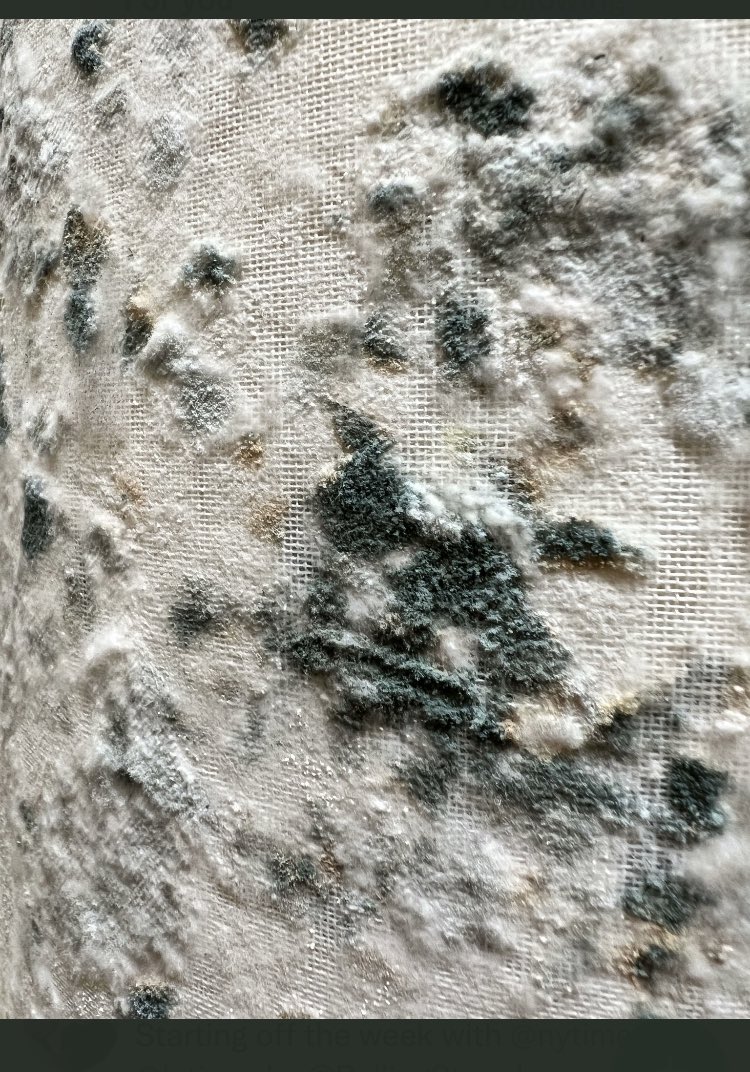
Mold splotches on cheesecloth

Many types of cheese make a virtue of mold, with cheesemakers encouraging certain types of molds and erasing others. The yeasts and molds on a rind get their sustenance from the cheese itself, and as they process those cheese nutrients, they also contribute to the slow breakdown of fat and protein in the cheese, which changes the texture, and also produces various esters and ketones that provide more complex flavors and odors to the cheese.

A skilled affineur, or cheese ager, knows how to develop and maintain a certain mold profile on a consistent basis. But still, these are wild, living organisms; the composition of the milk and therefore the organisms’ diet changes through the seasons; and there’s always subtle variation due to a variety of factors.

Subtle variation is the mark of a well-made artisan cheese. Wild, not-well-controlled variability is a manufacturing problem. And because skilled affineurs and just-right aging environments are somewhat rare and expensive, not having to carefully tend a rind is a big advantage in making an affordable product at scale–which was the primary goal of cheddarmakers almost from the very beginning.

This picture is courtesy of the head affineur at Rennet and Rind, a British affinage house. It’s a fantastic closeup of a bandage-wrapped cheese. But all that grotty-looking mold on the bandages…pretty much stays on the bandages. When you peel them off at the end of aging, you’ll have little to no mold on the thin rind, and a very clean-looking cheese.

Originally tweeted by IntoTheCurdverse (@curdverse) on February 6, 2023.

My Cheesemaking Origin Story

I’ve been reminded that today is my 10th anniversary of cheesemaking. Twitter figures into this story–as it does into the origin of the podcast–so let me see if I can tell this story in the right way…

Kid1’s birthday is just a few days after Christmas, so it’s always tough to come up with 2 events’ worth of presents all in one fell swoop. I was feeling a bit stumped.

I had 2 friends, one in Kentucky and one in Tennesse, who used to argue back and forth about whose state was the most redneck (each claiming the crown for their own state). One day one of them tweeted this:

"Enjoy your million dollar race horses in KY. We're keeping it real down here!" (Ad for Parent & Child cheesemaking class at a goat farm near Nashville)

Hmm….parent & child cheesemaking class?

Kid1 had loved cheeses of all kinds since he was a baby. Everything from brie to blue, since before he could talk.

I wondered if I might find such a thing in my area..and thanks to the power of Lord Google, I discovered that YES, there was a parent & child cheesemaking class scheduled for Jan 6, just a week after his birthday, at the San Francisco Cheese School. It was taught by one Louella Hill.

We made creme fraiche, ricotta, and stretched some pre-made mozzarella curd. I had never before had such ricotta!
In between, we tasted a couple of cheeses, burrata and a goat cheddar (with wine for the parents, sparkling cider for the kids)…

Plate with cheeses in foreground, a glass of white wine, block of mozzarella curd in the background.

Then we got a 20-minute overview of cheesemaking science. Kid1 is a great fan of science and was an enthusiastic audience for that portion especially.

A couple of years later I took a Pecorino class from her. She kinda thought she recognized me when I walked in, so I showed her the picture of Kid1 stretching curd. Her whole face lit up and she exclaimed, “Oh, I remember him! He was SOOO excited about it all!”

When she signed the copy of her book that we bought, she addressed it to Kid1, telling him he’d be a great cheesemaker some day. In point of fact, he has demonstrated no further interest in making cheese, but he is quite happy to have a mom who makes it for him.

So here we are, 10 years later, several cheeses always in the cave, a podcast, and who knows where this will all go next. All thanks to Kid1 and his fondness for cheese. And a bit of inspiration from Twitter friends.

Originally tweeted by IntoTheCurdverse (@curdverse) on January 7, 2023.

Of Shepherds Abiding In The Fields–And Their Cheese

There’s an old tale going around a lot this week, in which shepherds abiding in fields keep watch over their flocks by night. Very old tale: humans have been doing that for some 11-13,000 yrs, first for meat, then wool, then milk. The only animals w/whom we have an older domestic relationship are dogs.

You know where this is going…cheese. Yogurt is part of this thread too, since it’s what inspired a lovely article (to follow) which explores dairy in Eastern Turkey–the westernmost part of the Fertile Crescent region where domesticated sheep were developed. It’s about the hometown of Hamdi Ulukaya, the rags-to-riches founder of Chobani yogurt. In his hometown, of course, yogurt is made from whole sheep milk. so ~8% milk fat. Rather different from what’s Chobani makes in the US.

You really should read the whole article, if only to travel to someplace you may never go, and read about things that may soon disappear: notably the local cheese, which has been made pretty much the same way for millennia. But there are a few passages I wanted to highlight.

First, the fact that milk is actually a seasonal product, just like cherries & tomatoes. I’ve highlighted that in each of the Cheeses of the Seasons episodes, but it’s quite easy to forget for urban dwellers for whom milk is always just there, seemingly always the same. The authors of the article were unaware of that before visiting the town. =)

Image

Cows lactation cycle is quite long, typically ~300 days, and modern domesticated cows are not strongly seasonal breeders, with both reproduction and milk production being a matter of nutrition–this is partly why in cow-centric countries, milk seems eternally available. Sheep and goats are much more strongly seasonal, like their wild counterparts, and while modern science has made it possible to manipulate these cycles somewhat, their lactation cycles usually run 6-8 months for dairy breeds, less for non-dairy breeds.

Natural reproduction cycles for sheep and goats align very closely to natural feed availability. If you or your partner have ever nursed a baby, you know that milk output is minimal for the first 2-3 months, then kicks into high gear and mom is ravenous. Same for dairy animals. Babies are born in early spring; early milk production is powered primarily from mom’s own fat stores, augmented w/dried fodder and the first fresh grass. Just as babies start getting really hungry, pastures are full of mature grass. In the fall, as grasses dry and die, herds are traditionally culled, babies weaned and everyone goes on dry fodder again. Moms’ teats get a rest, and the cycle starts again. This brings us to a traditional method of cheese production: cheeses are made in-pasture, right after milking. In Europe, this in-pasture style of cheesemaking is called “alpage”, a designation you’ll see on some gruyere & other alpine cheeses.

Image

The milk is heated a bit during the cheesemaking process, but only some are heated to high enough temps to be counted as pasteurized. Most are raw milk. And here we come to conflicts between traditions and modern regulations.

Image

You’ll notice, in the above quote, another common element of dairying: gendered tasks. In western Eurasia, it’s common for men to look after live animals and for women to process the milk. So much so that cheesemaking and witchcraft–another heavily gendered activity–have long been linked in western folklore…

Image

About that goatskin in the previous quote: the local cheese, “tulum”, was traditionally aged not in caves but in animal-skin bags, which are much handier when you’re doing alpage cheeses while moving about in the mountains. Like any skin, they’re somewhat porous, allowing excess moisture to escape the curds and a regular flow of air to reach them. No doubt the authorities will have problems w/that too, even if the pasteurization issue gets resolved.

But there’s one more problem: that part about watching over their flocks by night:

Image

Sheep have changed a lot in the millennia since humans started rounding up mountain sheep–their shape, their size, how much wool and milk they produce. But their natural cycles–and those of their predators–have not. And our natural biorhythms haven’t either. In an era when there are many ways to earn a living that don’t involve staying up all night outside in the cold, human preferences tend to win. Back 2000+ yrs ago, when animals meant livelihood, even wealth, the sacrifice of a lamb to unseen powers was significant. It’s why it was embedded in rituals of many West Asian religions.

We’ve now mostly given up that form of sacrifice in the West, but you can still appreciate the work of all those shepherds, ancient and modern: if you’re thinking in terms of lambs this week consider partaking of some of their cheese. Here are a few suggestions to get you started:

Best Cheeses 2019: Sheep’s Milk – culture: the word on cheese

Discover some of our favorite sheep’s milk cheeses of 2019.

Cutting the Cheese

When I first arrived in France in my youth and was presented with a wedge of brie after dinner, I did what most Americans do: I cut off the tip. And was promptly admonished. You’re supposed to cut along the side, getting a very thin wedge for yourself so that everyone else partaking of the cheese can do same, everyone getting an equal amount of rind & paste. At the time, it was explained to me as politesse.

I was reminded of that moment when this popped up in my Twitter feed the other day:

There it was, my long-ago crime, compounded many times over by many different people and splashed across the internet. (I did, in fact, confess to my own commission of this crime on Twitter a couple of years ago.)

Let’s dissect this particular crime scene for a moment: the board contains 3 types of cheese, a white bloomy rind, a semi-firm cheese (the one cut into sticks that look like French fries if you’re not looking closely), and a blue cheese. This is a common number and the usual assortment of cheese types.

Two of these cheeses, the bloomy and the blue, are mold-ripened cheeses. The bloomy ripens from the outside in (cf Ep 7); the blue, at least as far as the blueing is concerned, from the inside out (Ep 8). So if you cut off the tip, you’ll get either the most (for the blue) or the least (for the bloomy) ripe part of the cheese, while everyone after you gets progressively riper or less blue portions and more rind . And the rind itself contributes flavor & texture, so ideally you want to experience it in a consistent ratio to the interior. Thus the desire to have everyone cut themselves a small slice from the side, allowing equal portions of interior (the paste) and the rind for everyone.

In general, you won’t go wrong doing that with any kind of cheese. But then why is the other cheese pre-cut in matchsticks? This was a catered event, not a private gathering, and you don’t want everyone who comes along wrestling to cut from a large, hard wheel of cheese. It breaks the flow of the food line. So you might as well pre-cut a hard cheese that won’t stick to the board at room temperature (unlike a well-made bloomy), especially since food waste is calculated into the catering budget. The cut pieces will dry out slightly, having been cut in advance, but harder cheeses are basically pretty stable at room temperature for long periods of time. This particular cheese is in matchsticks because the source wheel is fairly large and tall. So the prep staff cut out thin wedges, and cut each wedge across (just a little bit of rind on each end for everyone), and discarded the very thin end and the thick outer edge in the back.

Once you understand the basic principle here — complete, balanced taste and texture for yourself with each piece of cheese, and the same for everyone else — any other seemingly arbitrary rules about cutting cheese should start to make sense.

That said, there’s an excellent video by the late Anne Saxelby that delves a bit further into the different cheese types, and does a great job of explaining the nuances and reasons for cutting a cheese one way vs another. It’s also a very soothing way to while away a bit of a lazy weekend afternoon or evening. If you’re short on time, though, skip down below the video for a few words about knives.

Just as it’s possible to lay out 8 different kinds of forks, 3 knives, and a multiplicity of spoons at a fancy meal, each with its own specified function, it is possible to put out multiple kinds of cheese knives. The reality is, if you’re putting out a board for your guests to serve themselves…well, unless everyone you know is a great cheese enthusiast, virtually no one will know one from the next and everyone will use whichever knife comes to hand to cut whichever cheeses they want.

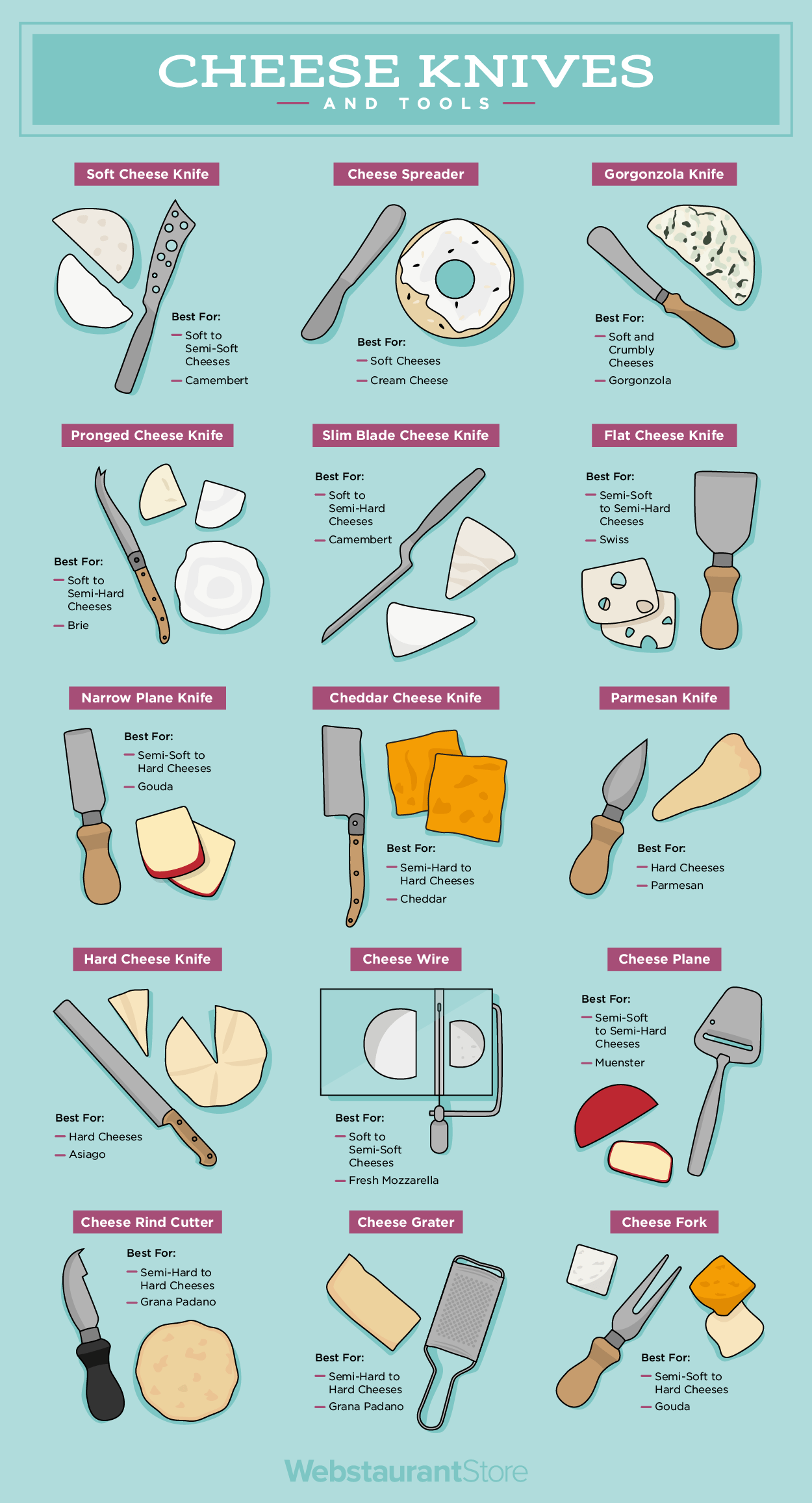
My pragmatic recommendation is to keep a paring knife at the soft-cheese end of your board, and a larger, sturdier knife at the hard cheese end. It cuts down on the number of times you get brie (and the mold spores it contains) smeared across your pecorino. You might also choose to keep a blue on a separate board with its own knife, as blue molds are even more aggressive. Of the knives in the graphic below, the one that I’ve found that is genuinely better for its purported function than the general-purpose knives one normally has in the kitchen is the Soft Cheese Knife. Because there’s less surface area for the sticky paste to cling to, it slices in and out neatly and doesn’t tear up the little wedge you’re trying to cut in the process.

And be sure to listen to Episode 12 for suggestions on what to put on your holiday cheese board. Just make sure there’s room left on the board to cut the cheese! Happy holidays.

Blue Cheese Flight – Tasting Notes

In the name of research for Episode 8 on blue cheeses, I recently organized a blue tasting.

We had three tasters: someone who likes cheddars and blues; someone mostly likes softer, younger cheeses but likes the occasional blue (but has a vendetta against Roquefort); and me, who likes a range of cheeses, but not usually blues.

I picked out six cheeses representing a range of styles:

Blue lovers will notice a distinct lack of Gorgonzola in the list. It’s simply because that’s the one blue cheese we typically get in our house. Around the holidays, Whole Foods sometimes has a Gorgonzola Cremificata, so soft that they dig it out of the wheel with an ice cream scoop and put it in a deli container. It’s wonderfully creamy, a bit salty, and has a moderate but not overwhelming blue flavor. The two main styles of Gorgonzola are both a bit older. You can see them both here.

I must also mention the family of Rogue Creamery blues. Rogue Creamery is in Oregon, and their cheese shop is just off of I-5 if you happen to be passing through the state. They also sell grilled cheese sandwiches there. 😄 They have fairly wide distribution through Whole Foods and higher-end cheese shops, and sell online.

They’re best known for their large, leaf-wrapped Rogue River Blue, though my personal favorite is a milder blue smoked over hazelnut shells (“Smoky Blue”).

Blue cheeses pair well with dark chocolate, pears, red fruits, toasted nuts and dessert wines. The 10 Year white port we found when visiting Porto in May was divine with all of the cheeses! (The producer, Vasques de Cavalho, has been growing grapes for port for several generations, but started their own label only recently. They’re still fairly small, though easily our favorite of the producers we visited.)

Over on Twitter, a couple of folks commented on how little the slices seemed to cost. I had gotten very small slices, just enough for a couple of bites of each for each of the three of us. When you have 4-6 cheeses, that’s really all you want–cheese is rich and filling, and the especially with a plate with all the same genre of cheese, it’s easy to get palate fatigue. So for ~US$10–less than a Starbucks per person–we were all completely satisfied.

So: the evening’s cheeses <drumroll>:

The Jasper Hill is a nice mild cheese, but not much blue flavor or other noteworthy elements.

The Cambozola appealed to those of us who like softer cheeses. It’s a newer German cheese that blends the techniques for Camembert and Gorgonzola. The blue flavor was more of a hint than the main event, which may be a good or a bad thing, depending on your tastes. It definitely leaned more towards the Camembert, with a great, unctuous mouthfeel and butter flavor.

The English Stilton and the Point Reyes blue were the next pair. The Stilton was still not blue enough for the blue lover, but the anti-Roquefortian thought it was just right. She and I both appreciated that it still tasted creamy, even being a drier cheese. The Pt Reyes is supposed to be a Stilton-style as well. To my taste it’s fairly salty, with a crumbly texture. It was a bit more brittle than the English Stilton, with a stronger Blue flavor.

#5 was a French Fourme d’Ambert. It’s softer in texture than the Stiltons, but very salty with a very strong blue flavor. The blue lover was a fan, the rest of us not so much.

This was a blind tasting, but Ms Anti-Roquefort kept trying to identify the Roquefort in order to feel vindicated in her hatred. She had decided it must be #5 and #6, and was trying to decide which was more terrible in order to identify the Roquefort.

#6 was a very soft, creamy cheese, with medium salt and medium blueness, a bit of sweet roundness. I liked this one a lot, finding it very nicely balanced. The blue lover preferred Pt Reyes and Fourme d’Ambert. Ms Anti-Roquefort still liked Cambozola and Stilton best, but found #6 quite acceptable.

#6 was the French sheep milk Roquefort.

Check out Episode 8 for more about blue cheese!

Originally tweeted by IntoTheCurdverse (@curdverse) on July 25, 2022.

Bloomy Deep Dive: Traditional Camembert

Here’s a lovely video about how traditional Camembert is made, which very nicely illustrates a number of the things I talk abt in Episode 7.

One thing I didn’t specifically mention is that as with many cheeses, the AOP version must be made with milk from a specific breed, in this case the Normande cow. You can see some in the background at :13: mostly white with dark red splotches.

The Normande breed produces high protein, high fat milk–4.4% fat on average, vs 3.25-3.5% from the typical Holstein.

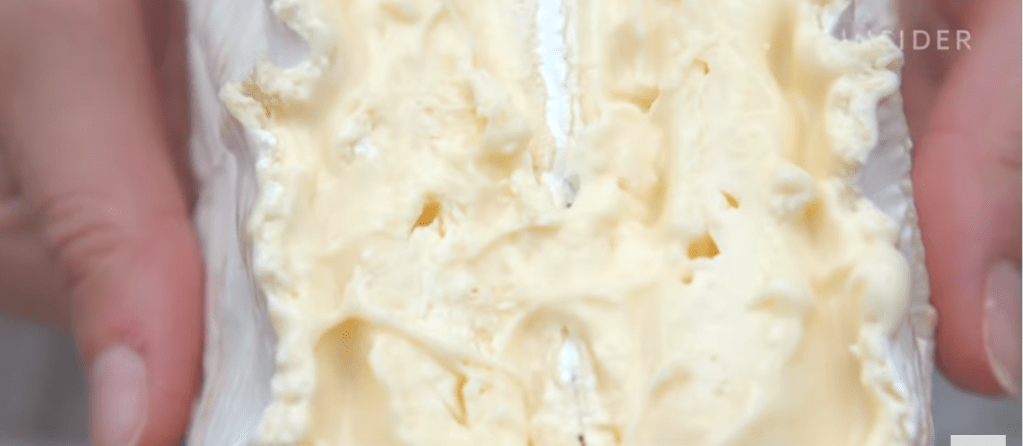
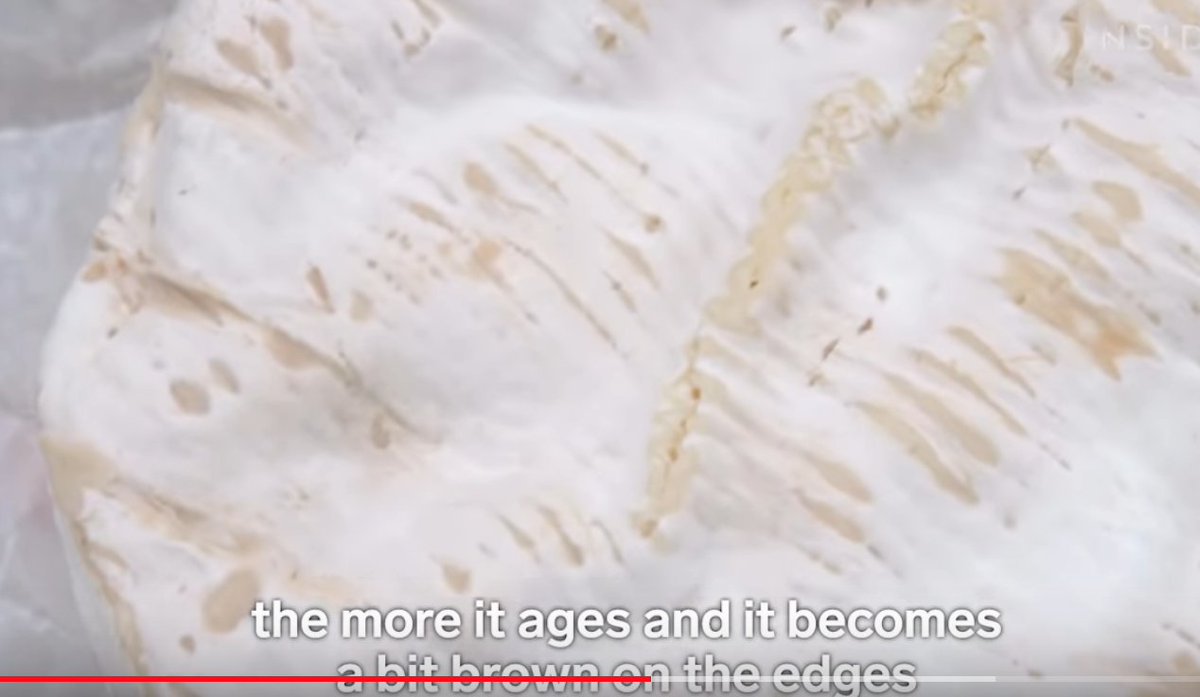
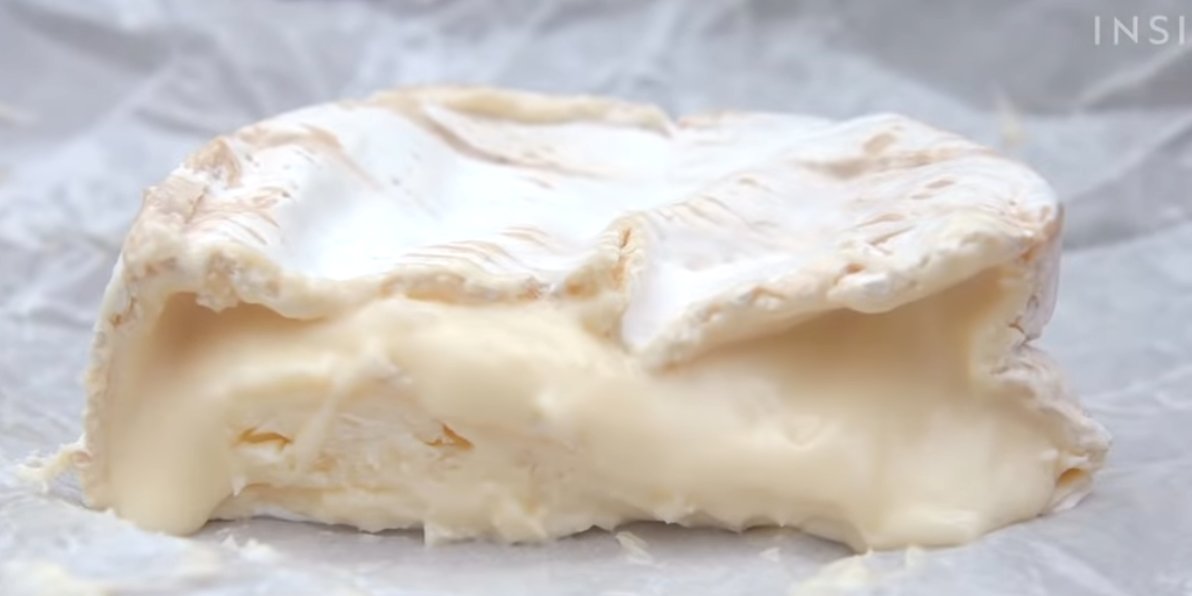
At 1:17 we get our first glimpse of the interior of a traditionally made bloomy rind. Unlike the stabilized paste cheeses typically available in supermarket, the texture is not even throughout the cheese. That’s because it ripens from the outside in.

At 1:35 the maker talks about the “croûte fleurie” of the cheese. That literally means “flowering crust”, referring to the fruiting of the geotrichum & penicilllium fungi on the rind. The slightly more indirect translation in English is “bloomy rind”.

Fun side fact for those who don’t speak French: that little “hat” mark over the U in croûte is called a circumflex, and it marks where there USED to be an S, which at some point stopped being pronounced in French, and then much later orthography caught up with pronunciation. We often have the same word, with the S, both in writing and in speech, in English: croûte = crouste = crust.

In the podcast I mentioned that most of these bloomies were originally farmhouse cheeses, things that didn’t require a lot of hands-on work that would tie down the farmwife (typically) as she ran around taking care of all of the OTHER business of running a farm & household. So a lot of these cheeses are traditionally made from raw milk that’s just left to sit around and acidify on its own for 12-24 hours. (Longer if it’s cooler, less time if it’s warmer.)

Discussion of acidification process above

Some bloomies are entirely lactic set with very little rennet–many of the goat cheeses, and also Brie de Melun. Others, including most other types of Brie and also Camembert, get more rennet added (as at 2:29) for a bit more structure to the curd.

Note that the raw milk is never heated: it just comes out of the animal and is left to sit in buckets or forms as it acidifies. The French often categorize cheese by dividing them into “cooked” and “uncooked” cheeses for this reason, and then “pressed” and “unpressed”.

At 2:32 we see the curd being cut into quite large chunks. This allows the curd to retain a lot of liquid, which will help it break down quickly over a few weeks.

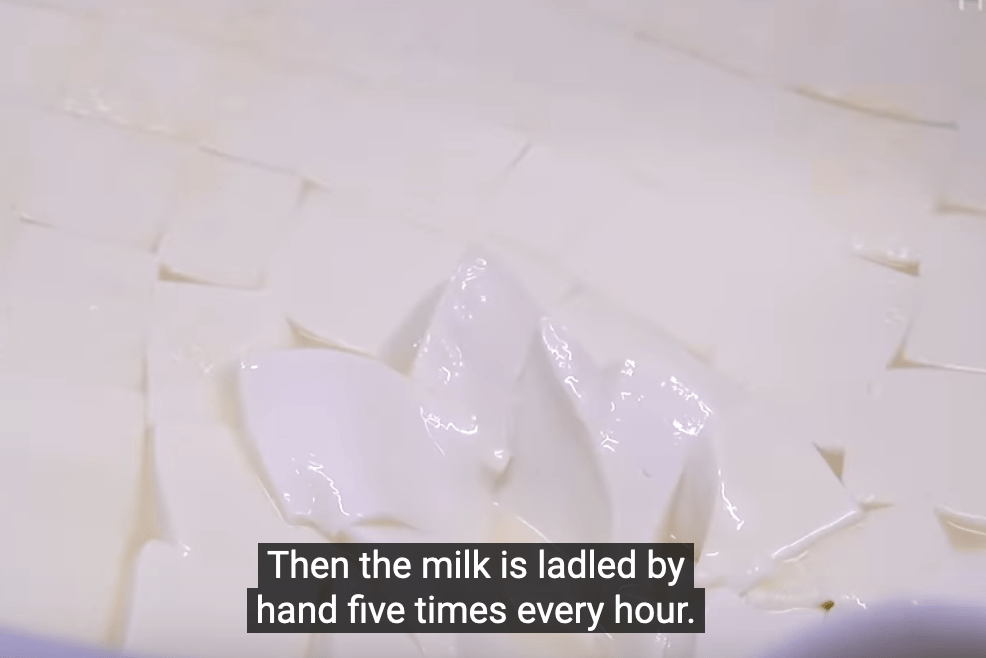
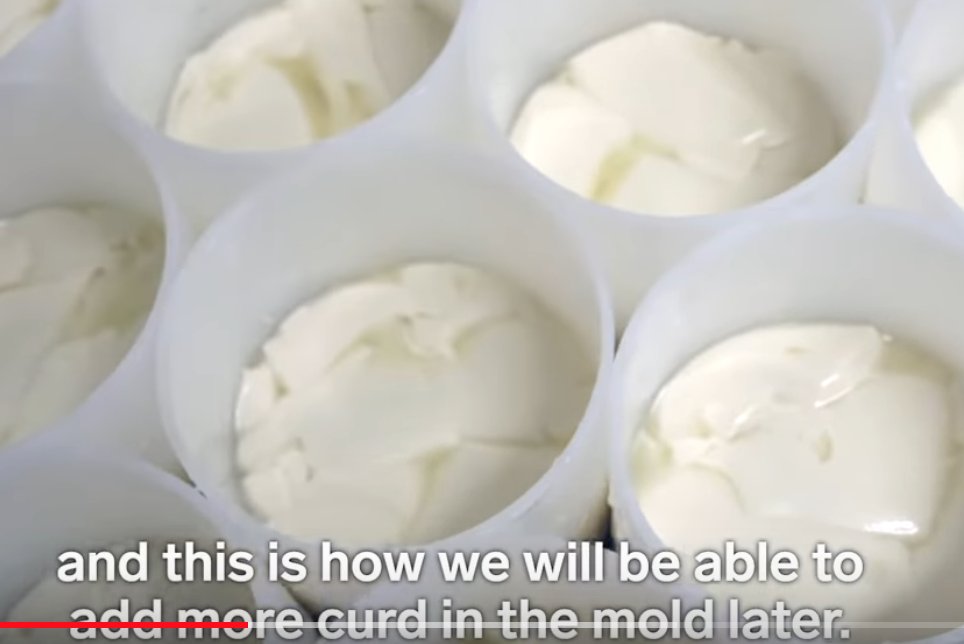
The curd is barely stirred, if at all, so it hardly retains its shape as it gets ladled into molds. As the maker notes at 2:42, each layer of ladling (one ladle per hour into each mold) condenses from a full mold into a thin layer over an hour, as the fragile curd blocks quickly collapse. Camembert molds are simply round cylinders with holes on the sides and no bottom. The whole goal is to allow the whey to drain out without any impedance.

Here you can see the curds collapsing and flattening as they shrink down into the mold.

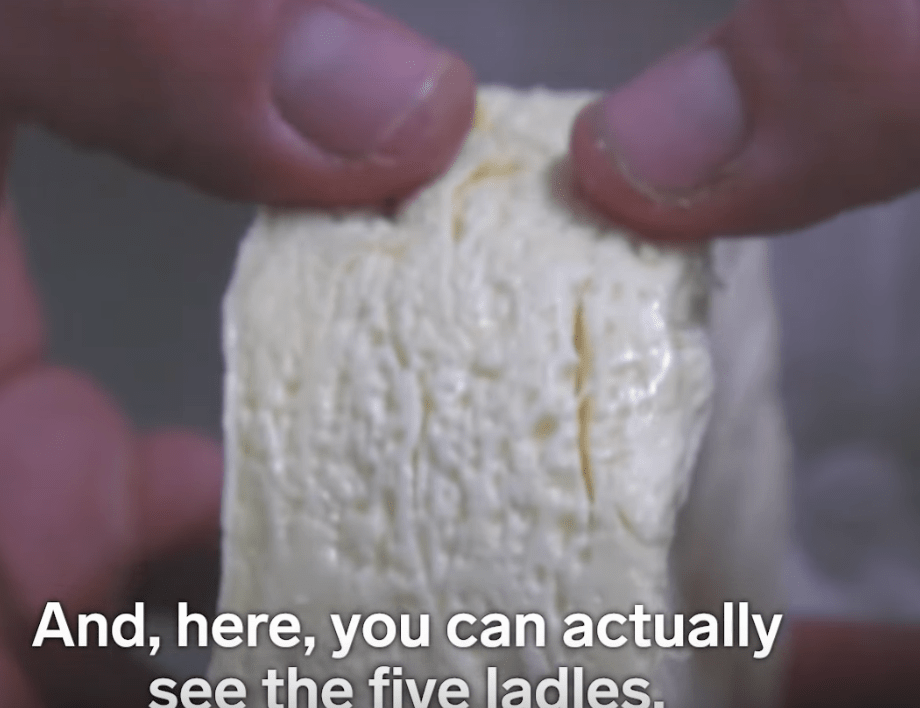
In case you’re wondering, yes, a little bit of a skin does develop on the top of each layer during the hour between ladlings, as the top portion, exposed to the air, dries out a bit. At 3:33, the maker pulls on the sides of a day-old cheese to show how the layers can be seen. The cheese is unpressed other than with the weight of new curds being added on top of others, so they aren’t tightly knit together.

At this point it should become clear that this approach, while wonderfully low-key from the point of view of someone with a million other things to do in a day–18-24 hours to acidify, another 30-45 minutes to coagulate, 5 hours to mold, just stopping by every now and then and then going on about other business–is completely antithetical to mass production, where high throughput is king. So mass-market cheeses are made with lots of added cultures to jumpstart acidification; the molding/draining process is also done at a warmer temperature, so curds drain faster. It’s the opposite of “low ‘n slow”.

Around 3:45 they talk about the aging time, 4-5 weeks, which allows the fuzzy white molds (fungi, really) to grow in on the surface and then work their way into the curd. Here you can see cheeses a week or so old, when the rind is just partially grown in. It comes in patchily at first, then starts to spread until you get a fairly even coat.

The maker mentions at 3:57 that they add geotrichum and penicillium. Sometimes freeze-dried spores are added to the milk as it’s acidifying; in other cases, especially large productions, they can be added to brine that is sprayed on the surface of the cheese after it’s made. Because there’s less of the fungi active in the curd, this enables the producer to have a nice traditional-LOOKING cheese, but less outside-in aging, which would produce a less even texture.

Towards the end of Ep 7 I talk about how to select a cheese in the supermarket. One thing to look at is the evenness of the rind. Some bloomies are sold, honestly, too young, and never really soften well in your fridge. Others, especially imported ones, are often older than ideal. You can decide for yourself what the sweet spot for you is, depending on how quickly you eat your cheese. If it’s for a party tomorrow, buy an older one. If you just have a few slices every few days, buy a younger one.

At 4:06, we see how in older cheese starts to develop “bald” spots, where a beige rind starts to show through.

At 4:10 we get a closer look at the inside of a traditionally ripened bloomy: crust about the texture of wet cardboard, oozing paste just inside it (called the “cream line”) and then a still-firm, cakey-textured center.

This is obviously quite different from the stabilized-paste bloomies we typically get in supermarkets. I talk about how stabilized paste is different in virtually every aspect of how it’s made towards the end of Ep 7.

So if you see something with these multiple textures, you’re getting a cheese made fairly traditionally–but you’ll want to eat it quickly. If it’s uniformly firm, with no “squish”, it’s a stabilized-paste and either extremely young, or one of the brands that never really softens.

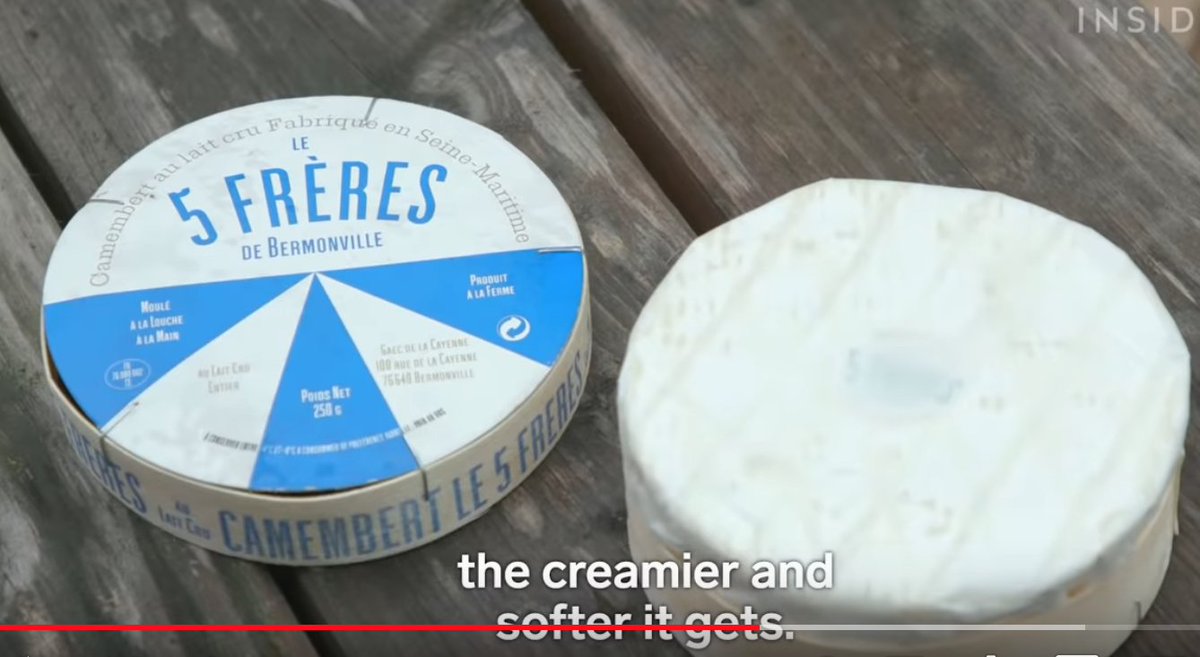
Around 4:33 the maker talks about the traditional wooden box in which Camemberts are often sold: it helps the cheese keep its shape as it softens and ages, and protects it from getting squished during transport.

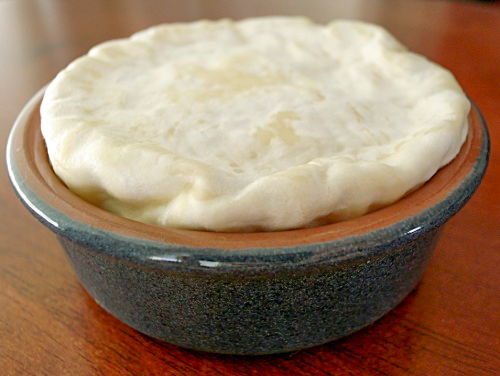
A number of soft-ripening cheeses are packaged this way, in fact…St Marcellin, a bloomy with a very thin rind, is often packed in small ceramic pots because it gets runny so easily.

Source

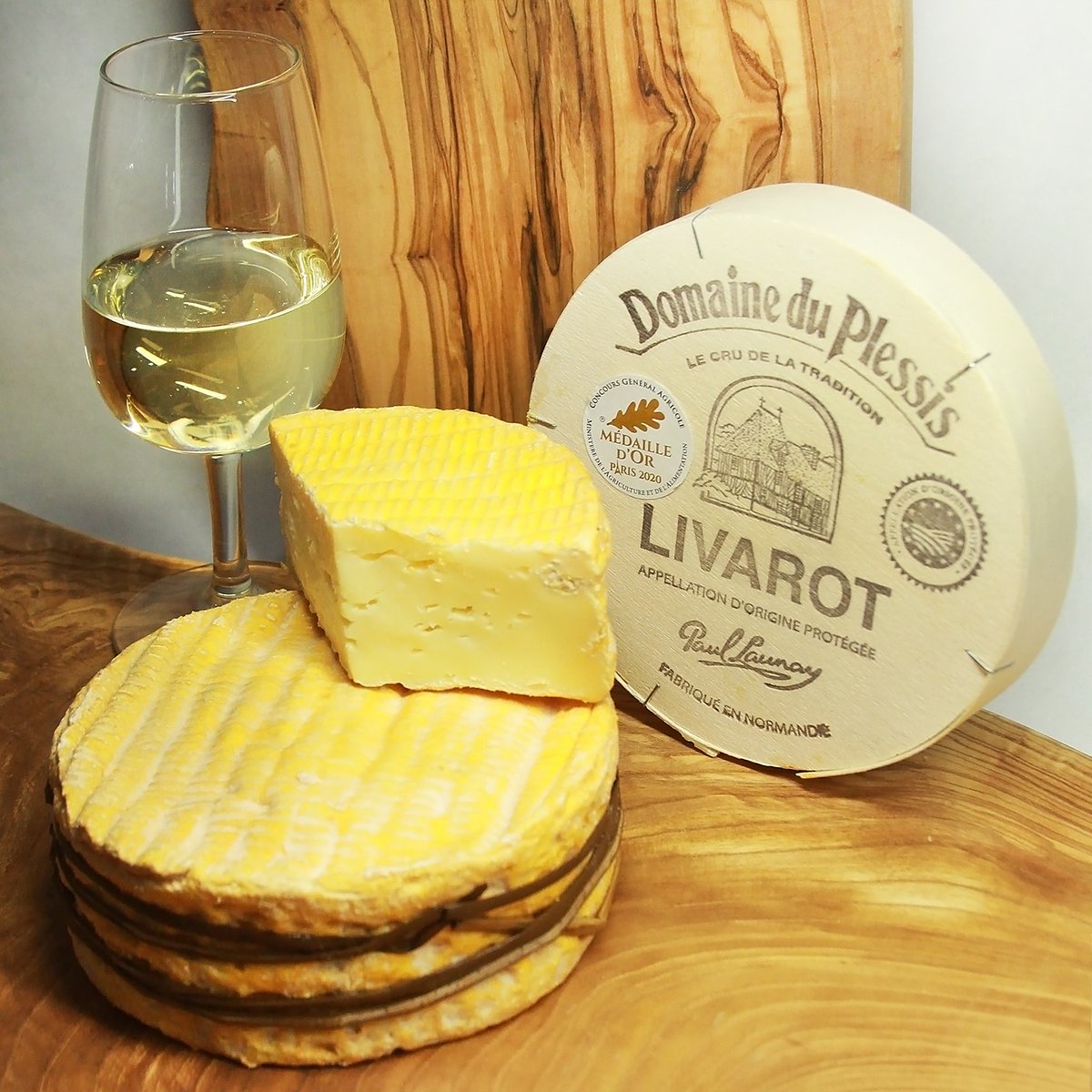
Livarot, another Norman cheese (washed rind, not bloomy) that’s probably older than Camembert, is taller and traditionally tied twice around with raffia to help it hold its shape.

Source

Around 7:11 they mention that most of the Camembert made today is made with pasteurized milk. Only ~10% of Camemberts are made the way we’ve just seen, with raw milk. Because of the very long production time for the traditional approach the AOP label is extremely important commercially for small, traditional producers–it allows them to differentiate their product and maintain a price premium that allows them to stay out of the red financially.

The label, however, is a subject of much controversy, as the government has broadened the label in different ways several times. Here’s a discussion of one of the more recent contretemps…which, because it’s France, led to protests that included traditional Camembert cheeses being dropped in MPs’ letterboxes.

All of this is neither here nor there for those of us in the US, since 4-5 week old, raw milk cheese can’t be imported here. But if you’re touring around France, enjoying Euro-dollar parity, you may wish to look for “fermier” on the label in a proper cheese shop to get the full flavor experience of a traditionally made Camembert.

Originally tweeted by IntoTheCurdverse (@curdverse) on July 17, 2022.

The Wonderfulest Thistle

There’s a tongue-twister in English about “Theophilus Thistle”, or as I pictured it as a child, “The Awfulest Thistle”:

Purple cardoon thistle in bloom
If Theophilus Thistle, the successful thistle sifter,
In sifting a sieve full of unsifted thistles,
Thrust three thousand thistles through the thick of his thumb.
See that thou, in sifting a sieve full of unsifted thistles,
Thrust NOT three thousand thistles through the thick of THY thumb.

It kept coming to mind as I toured Portugal last month, since the Portuguese have a special fondness for using thistle rennet in their cheeses. (I talk a lot more about this in Episode 6.) They’re not the only people to do so, though: their neighbors in western and northern Spain often do as well. The rennet can be made with the purple stamens of the flowering thistle, but the leaves of some plants also contain the same protein-metabolizing enzymes. And these have an effect on a very different cheese made far to the north of Iberia: Cornish Yarg.

Yarg is not common on North American cheese counters, but it’s a somewhat famous oddity in the cheese world due to being wrapped in nettle leaves

There are a bunch of cheeses that get wrapped in leaves—fruit and nut tree leaves are more common though.

Nettles themselves aren’t a common food in North America, but have been used much like other leafy vegetables all over Europe for thousands of years. They happily grow wild in many places that are difficult to farm, which has been important for people living on marginal lands.

In such places, where plant cultivation is minimal, livestock agriculture is key to subsistence. And in most subtropical regions of the northern hemisphere, that also means a diet heavy in dairy and cheese, as those are more renewable sources of protein than meat.

How useful, then, that nettles and thistles can also coagulate milk! No need to kill very young animals that don’t have much meat on them and then have to cure their stomachs while (in some regions) following your herds in a foraging circuit, with no fixed house or barn. Unlike animal rennet, plant rennets are relatively easy to make at need and don’t require long-term storage.

But you’ll often see comments about plant rennets making cheese bitter as they age. And it’s true that plant-rennet cheeses today are most commonly found in traditionally hardscrabble regions, cuz who would want to eat bitter cheese if they didn’t have to?

But this bitterness claim didn’t exactly jibe with what I found in actually eating a range of Portuguese cheeses last month, virtually all of which are made with cardoon rennet. No bitterness even in the harder ones. So is this bitterness trope just a snobbish old wives tale?

Upon further digging I found the key to the “bitterness” claim lies in the type of milk used: in Ep 4 I talked a bit about how milk from different species are structurally different. The range of flavors that cheeses develop as they age is a byproduct of the breakdown of the fats and especially proteins in the milk. And in Iberia, especially in the places fond of using cardoon rennet, they mostly make sheep and goat cheeses.

I’m going to get gross here for a minute. You know how different people in your family have different- smelling farts even though you all eat the same food? It’s because each of you has your own unique set of gut bacteria, which break down your food in slightly different ways. Each metabolizes different parts of the compounds in your food, some more efficiently than others, and with different byproducts as a result. Same thing with the cultures and rennet in your cheese. Cow milk in particular often contains more long-chain proteins than sheep or goat and its proteins can produce a set of bitter peptides under the influence of cardoon (thistle) rennet, while sheep and goat milk do not.

In Ep 2 I talked a little bit about rennets, about how in mammal stomachs we have two major enzymes, chymosin and pepsin, that do the first-pass food breakdown. With animal rennet, the source animal is slaughtered when the ratio is mostly chymosin. Pepsin is a much stronger enzyme that comes to the fore as the animal starts to consume solid food.

Plant rennets have no chymosin, and unlike animal rennets, which exhaust themselves fairly quickly, leaving most of the long-term aging to the remaining cultures, plant rennets keep going and going…

Energizer bunny gif

So you get faster, more aggressive proteolysis, or protein breakdown, with plant rennets.

But back to yarg: although it’s typically made with cow milk and animal or microbial rennet, it’s often soft and creamy on the outside, directly under the leaf wrapping, and firmer/crumbly in the interior. That’s because the nettle leaves are breaking down the part of the cheese they’re in direct contact with, faster than the enzymes present in the rest of the cheese.

Originally tweeted by IntoTheCurdverse (@curdverse) on June 18, 2022.

ADDENDUM

I thought I’d add a pointer to US-made nettle cheese I had the pleasure of meeting a few years ago: “Nettlesome” from Valley Shepherd Creamery in New Jersey. Although they’re primarily a sheep farm, this particular cheese is a Gouda-style cow milk cheese. Finely minced nettles are mixed into the curds, giving it a slightly vegetal flavor and just a bit lip-tingly experience. I’d suggest pairing it with a dry cider, like Stella Artois. The carbonation and fructose balance out the nettly-ness.

It’s sold in certain specialist cheese shops (we found it in the store at Cowgirl Creamery), but they also sell direct–you can order from them online.

What We Do To Milk: Standardization, Homogenization, and Pasteurization

In Episode 2, I mentioned that the milk that most of us get from the supermarket is a highly engineered product, distinctly different from what comes straight from an animal in many ways. Here I’m going to explain what I meant by that.

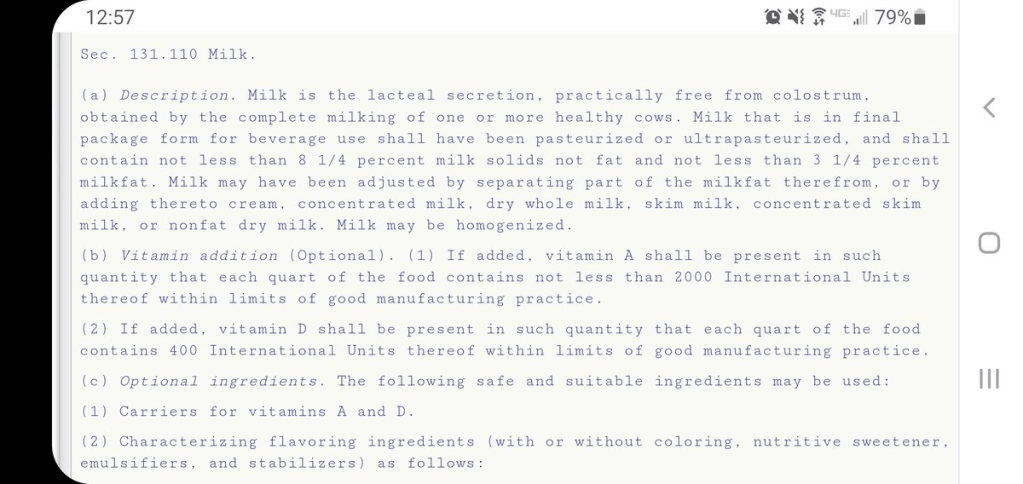
The first thing to know is that whole milk isn’t just whatever comes out of a cow, and maybe pasteurized. Take a look at the US FDA definition of “milk”:

Specifies milk as coming from healthy cows, should be pasteurized, no less than 8.25% non-fat solids and no less than 3.25% milkfat; the % may be adjusted by skimming or adding cream, dry milk, etc.

Milk in the US must have a minimum of 3.25% fat and 8.25% other solids (proteins, vitamins and minerals, etc). These standards vary by country. The fat percentage in particular is higher in many countries, usually 3.5%. If you’ve ever wondered why US milk doesn’t seem as creamy as elsewhere, now you know why. US producers are allowed to skim more cream from their milk and still call it milk.

But milkfat content naturally varies a lot in milk. It varies by animal breed, by stage of lactation cycle, by season, quality and type of feed, and of course individual animals vary. So the other part of the definition allows the processor to adjust the actual levels in the milk on hand with various other dairy additives. If the levels are too low, they can add extra cream and other milk solids. There’s no maximum limit, but if things are significantly above required levels, processors may skim off more of the fat, since cream gets a good price on its own.

This balancing of milkfats and solids to predefined levels is called “standardization”. The milk we buy in the supermarket–even if it’s “cream top” or non-homogenized–is almost always standardized. On the other hand, if you buy milk directly from a farm or a very small producer, it may be pasteurized–heated to a specified temperature for a certain period of time–in order to kill all the microbial content of the milk, but it may not be standardized or homogenized.

In recent years, liquid milk producers seeking to capture the growing “premium” segment of the market for the sake of better margins, have started to offer non-homogenized milks. Sometimes they’re also organic, sometimes not. Lack of homogenization may indicate generally less engineering, but there are large producers who standardize and just don’t homogenize in order to capture the price premium that comes from the perception of their milk being inherently more “natural”. One “cream top” brand also pasteurizes at near-ultra pasteurization temps, which results in a flat-tasting milk which isn’t great for cooking with. (Never mind making cheese. As I found out the hard way.)

The largest share of the liquid milk market in the US is 2%, not whole milk. That’s what gets served in schools and most other government facilities, which are meaningfully large customers for large milk producers.

Market share of whole milk, dropping from above 30% in 1975 to under 15% in 2012. 2% milk has the largest share.
So sometimes the standard process is simply to separate all the milk from its cream as it comes in to the processing plant, and then add the requisite amount of cream back in based on orders for the various types. And THEN the milk is pasteurized, homogenized and packaged.

Cream separation for cow milk is done by centrifuge. This is different from homogenization, in which the milk is forced through a mesh, in order to cut the fat globules small enough to stay in solution. The temperature and speed at which the milk is separated drives cream density. Cooler and slower processes give manufacturing or “pastry grade” cream, which is typically ~46% milkfat. The cream in supermarkets sold to US consumers is typically in the mid 30%s.

Large producers are also sourcing from lots of different dairies with different approaches to feed, etc. They all get blended together and then processed as above. It makes for a very consistent product, but also one deliberately void of any distinct flavors or terroir.

By the way, if you’ve ever wondered about why there’s so much about Vitamins A and D in milk marketing, it’s because they’re fat-soluble vitamins. Remove milkfat, and you also remove vitamins. But since milk provided to schools has to meet the same nutritional requirements as whole milk, processors have to add those vitamins back by other means (“A and D fortified”). And when selling to the general public you want to explicitly tell your buyers that lower fat milks are still nutritious, but also don’t want to give the impression full fat milks DON’T have as much A and D, so they tend to be marketed on all milk types.

All of this, of course, is largely irrelevant for non-cow milks. They still meet the FDA minimums by default–goat milk is typically close to 4% milkfat and sheep 7-8% and non-fat solids are usually proportionally higher. And those milks are naturally “homogenized”, in the sense that the fat molecules in those milks don’t separate out easily. There aren’t nearly as many large dairies or processors of these milks, and the percentage of liquid milk vs other uses for those milks is also very different than for cow. The majority of goat milk in the US is sold to cheese manufacturers, and virtually all sheep milk, rare as it is, gets made into cheese.