What is bandage wrapping?

In Ep 13 on Cheddar, I mentioned bandage wrapping a few times in passing, but I found out from Twitter discussions that there are plenty of folks who are unfamiliar with the technique, since it’s something one only very rarely sees on package labels, and even then, there’s nothing resembling a “bandage” in evidence when you buy that piece of cheese.

With bandage-wrapping, you sort of make a mummy of your cheese: smear a layer of fat on the rind–originally whey butter, then later suet, now some folks use vegetarian options like palm or even Crisco. I like to use bacon grease, as it’s something we always have a lot of and it adds a wonderful, subtle, smoky flavor to the cheese. Then add a layer of cheesecloth and press it into the fat. Repeat two to three times more.

If you’re familiar with confit, you’re probably aware that fat can be used to seal off meat from oxygen and unwanted microbes that might otherwise grow on the surface of the meat. It’s the same principle here. The layers of cheesecloth make it easier to apply additional layers of fat since that’s harder to apply thickly on a freestanding thing like a cheese, vs meat that’s placed in a crock and surrounded w/liquid fat. The cloth is breathable, so it allows for some passage of air & moisture (waxed cheeses get much less), but cloth & fat combo greatly limits the exchange. That in turn limits how thick the rind of the cheese gets, which is important in a cheese that will age for a long time: you get more edible cheese if you don’t have a thick, dry rind. At the same time, it slows the surface aging, while allowing the interior to ripen slowly.

You don’t get as thick and dry a rind because less moisture is able to evaporate through all that coating. And that’s important in regions where the climate is relatively dry–especially if it’s also warm–because it prevents the rind from cracking. Cracks in your rind let in molds and sometimes also insects, if you’re an 18th or 19th century cheesemaker aging your cheeses in a barn or cellar. And those are bad news.

Cracking is less likely to happen if the cheese is almost evenly dry all the way through–think of the really hard cheeses from warm, dry climates like Parmesan or Pecorino. But Cheddar was designed to be a softer, moister, more toothsome cheese–and it was originally designed for shipping in the cool, damp climate of the North Atlantic. But New England gets hotter and drier in summer and colder and drier in winter than Britain–and already in the 1700s New England cheesemakers were shipping their wares to the much hotter climes of the mainland southern colonies as well as the British colonies of the Caribbean. So protecting the rind was critically important.

By contrast, you don’t get cracking if the cheese is kept in a cool, humid place–but you do get mold growth. And this is the other big attraction of bandage-wrapping: it limits mold growth on the rind of the cheese. So bandage wrapping has advantages no matter what sort of climate your cheese finds itself in.
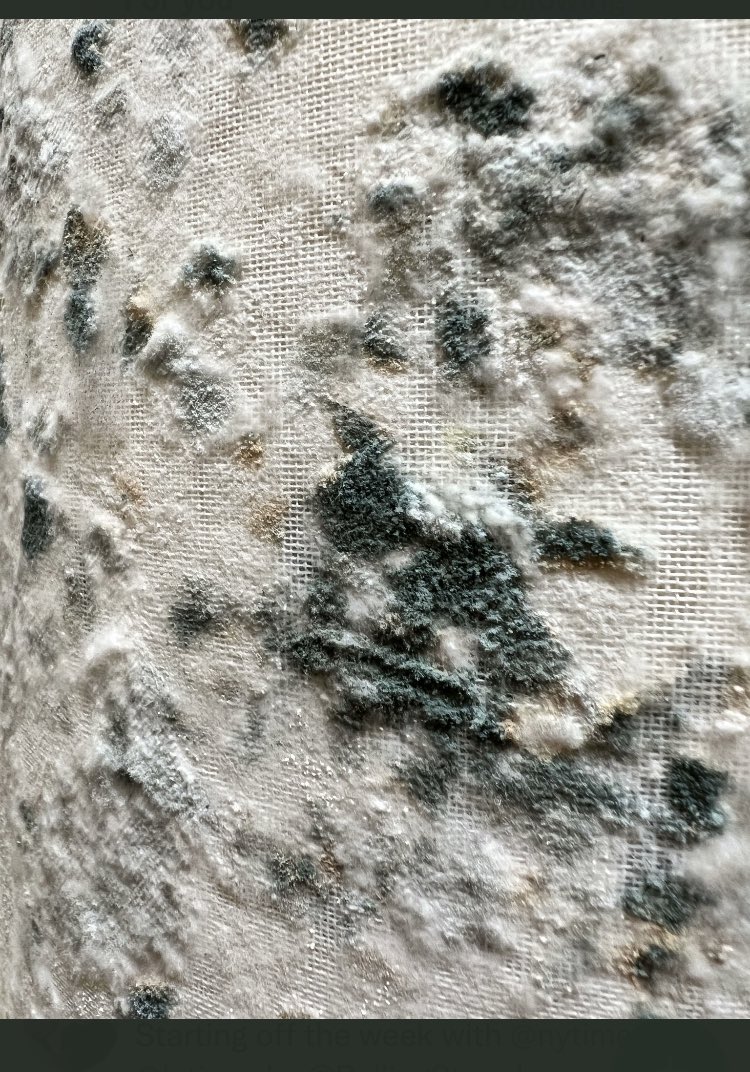
Mold splotches on cheesecloth

Many types of cheese make a virtue of mold, with cheesemakers encouraging certain types of molds and erasing others. The yeasts and molds on a rind get their sustenance from the cheese itself, and as they process those cheese nutrients, they also contribute to the slow breakdown of fat and protein in the cheese, which changes the texture, and also produces various esters and ketones that provide more complex flavors and odors to the cheese.

A skilled affineur, or cheese ager, knows how to develop and maintain a certain mold profile on a consistent basis. But still, these are wild, living organisms; the composition of the milk and therefore the organisms’ diet changes through the seasons; and there’s always subtle variation due to a variety of factors.

Subtle variation is the mark of a well-made artisan cheese. Wild, not-well-controlled variability is a manufacturing problem. And because skilled affineurs and just-right aging environments are somewhat rare and expensive, not having to carefully tend a rind is a big advantage in making an affordable product at scale–which was the primary goal of cheddarmakers almost from the very beginning.

This picture is courtesy of the head affineur at Rennet and Rind, a British affinage house. It’s a fantastic closeup of a bandage-wrapped cheese. But all that grotty-looking mold on the bandages…pretty much stays on the bandages. When you peel them off at the end of aging, you’ll have little to no mold on the thin rind, and a very clean-looking cheese.

Originally tweeted by IntoTheCurdverse (@curdverse) on February 6, 2023.

Ep 13: All About the Cheddah

Cheddar is one of the most widely sold cheeses in the world. It’s made in every hemisphere, and is a central ingredient in countless casseroles and other cheesy dishes throughout the Anglosphere.

Its signature tang and unusual size and shape are all products of a quest for the perfect balance between a crowd-pleasing, snackable texture and durability.

Its history encompasses trade wars, conquest and empire, and the birth of industrial-scale food production, as well as international cooperation in the development of dairy science.

Dive in with the first episode of Season 2, and don’t miss the continuation of the story in Episode 14!

(Re) sources

Ep 2: A Leap Towards Immortality

What Is Bandage Wrapping?

Cheese and Culture

Government Cheddar Cheese

Essex Cheese

How a 3,930 Pound Cheese Helped Union Army Soldiers During the Civil War

Credits

Photo: Wookey Hole Cave Aged Cheddar

Battle Hymn of the Republic – US Air Force Band

My Cheesemaking Origin Story

I’ve been reminded that today is my 10th anniversary of cheesemaking. Twitter figures into this story–as it does into the origin of the podcast–so let me see if I can tell this story in the right way…

Kid1’s birthday is just a few days after Christmas, so it’s always tough to come up with 2 events’ worth of presents all in one fell swoop. I was feeling a bit stumped.

I had 2 friends, one in Kentucky and one in Tennesse, who used to argue back and forth about whose state was the most redneck (each claiming the crown for their own state). One day one of them tweeted this:

"Enjoy your million dollar race horses in KY. We're keeping it real down here!" (Ad for Parent & Child cheesemaking class at a goat farm near Nashville)

Hmm….parent & child cheesemaking class?

Kid1 had loved cheeses of all kinds since he was a baby. Everything from brie to blue, since before he could talk.

I wondered if I might find such a thing in my area..and thanks to the power of Lord Google, I discovered that YES, there was a parent & child cheesemaking class scheduled for Jan 6, just a week after his birthday, at the San Francisco Cheese School. It was taught by one Louella Hill.

We made creme fraiche, ricotta, and stretched some pre-made mozzarella curd. I had never before had such ricotta!
In between, we tasted a couple of cheeses, burrata and a goat cheddar (with wine for the parents, sparkling cider for the kids)…

Plate with cheeses in foreground, a glass of white wine, block of mozzarella curd in the background.

Then we got a 20-minute overview of cheesemaking science. Kid1 is a great fan of science and was an enthusiastic audience for that portion especially.

A couple of years later I took a Pecorino class from her. She kinda thought she recognized me when I walked in, so I showed her the picture of Kid1 stretching curd. Her whole face lit up and she exclaimed, “Oh, I remember him! He was SOOO excited about it all!”

When she signed the copy of her book that we bought, she addressed it to Kid1, telling him he’d be a great cheesemaker some day. In point of fact, he has demonstrated no further interest in making cheese, but he is quite happy to have a mom who makes it for him.

So here we are, 10 years later, several cheeses always in the cave, a podcast, and who knows where this will all go next. All thanks to Kid1 and his fondness for cheese. And a bit of inspiration from Twitter friends.

Originally tweeted by IntoTheCurdverse (@curdverse) on January 7, 2023.

Of Shepherds Abiding In The Fields–And Their Cheese

There’s an old tale going around a lot this week, in which shepherds abiding in fields keep watch over their flocks by night. Very old tale: humans have been doing that for some 11-13,000 yrs, first for meat, then wool, then milk. The only animals w/whom we have an older domestic relationship are dogs.

You know where this is going…cheese. Yogurt is part of this thread too, since it’s what inspired a lovely article (to follow) which explores dairy in Eastern Turkey–the westernmost part of the Fertile Crescent region where domesticated sheep were developed. It’s about the hometown of Hamdi Ulukaya, the rags-to-riches founder of Chobani yogurt. In his hometown, of course, yogurt is made from whole sheep milk. so ~8% milk fat. Rather different from what’s Chobani makes in the US.

You really should read the whole article, if only to travel to someplace you may never go, and read about things that may soon disappear: notably the local cheese, which has been made pretty much the same way for millennia. But there are a few passages I wanted to highlight.

First, the fact that milk is actually a seasonal product, just like cherries & tomatoes. I’ve highlighted that in each of the Cheeses of the Seasons episodes, but it’s quite easy to forget for urban dwellers for whom milk is always just there, seemingly always the same. The authors of the article were unaware of that before visiting the town. =)

Image

Cows lactation cycle is quite long, typically ~300 days, and modern domesticated cows are not strongly seasonal breeders, with both reproduction and milk production being a matter of nutrition–this is partly why in cow-centric countries, milk seems eternally available. Sheep and goats are much more strongly seasonal, like their wild counterparts, and while modern science has made it possible to manipulate these cycles somewhat, their lactation cycles usually run 6-8 months for dairy breeds, less for non-dairy breeds.

Natural reproduction cycles for sheep and goats align very closely to natural feed availability. If you or your partner have ever nursed a baby, you know that milk output is minimal for the first 2-3 months, then kicks into high gear and mom is ravenous. Same for dairy animals. Babies are born in early spring; early milk production is powered primarily from mom’s own fat stores, augmented w/dried fodder and the first fresh grass. Just as babies start getting really hungry, pastures are full of mature grass. In the fall, as grasses dry and die, herds are traditionally culled, babies weaned and everyone goes on dry fodder again. Moms’ teats get a rest, and the cycle starts again. This brings us to a traditional method of cheese production: cheeses are made in-pasture, right after milking. In Europe, this in-pasture style of cheesemaking is called “alpage”, a designation you’ll see on some gruyere & other alpine cheeses.

Image

The milk is heated a bit during the cheesemaking process, but only some are heated to high enough temps to be counted as pasteurized. Most are raw milk. And here we come to conflicts between traditions and modern regulations.

Image

You’ll notice, in the above quote, another common element of dairying: gendered tasks. In western Eurasia, it’s common for men to look after live animals and for women to process the milk. So much so that cheesemaking and witchcraft–another heavily gendered activity–have long been linked in western folklore…

Image

About that goatskin in the previous quote: the local cheese, “tulum”, was traditionally aged not in caves but in animal-skin bags, which are much handier when you’re doing alpage cheeses while moving about in the mountains. Like any skin, they’re somewhat porous, allowing excess moisture to escape the curds and a regular flow of air to reach them. No doubt the authorities will have problems w/that too, even if the pasteurization issue gets resolved.

But there’s one more problem: that part about watching over their flocks by night:

Image

Sheep have changed a lot in the millennia since humans started rounding up mountain sheep–their shape, their size, how much wool and milk they produce. But their natural cycles–and those of their predators–have not. And our natural biorhythms haven’t either. In an era when there are many ways to earn a living that don’t involve staying up all night outside in the cold, human preferences tend to win. Back 2000+ yrs ago, when animals meant livelihood, even wealth, the sacrifice of a lamb to unseen powers was significant. It’s why it was embedded in rituals of many West Asian religions.

We’ve now mostly given up that form of sacrifice in the West, but you can still appreciate the work of all those shepherds, ancient and modern: if you’re thinking in terms of lambs this week consider partaking of some of their cheese. Here are a few suggestions to get you started:

Best Cheeses 2019: Sheep’s Milk – culture: the word on cheese

Discover some of our favorite sheep’s milk cheeses of 2019.

Ep 11: The Smearing of Washed Rinds

Washed rind cheeses are popular across Northern and Eastern Europe, but their reputation for stinkiness had dire implications for their popularity in late-Victorian North America–and for North American cheesemaking as a whole!

(Re) Sources

The Science of Cheese, Ch. 8

German-American immigration

The Cheese That Stands Alone

Ep 2: A Leap Towards Immortality

Media

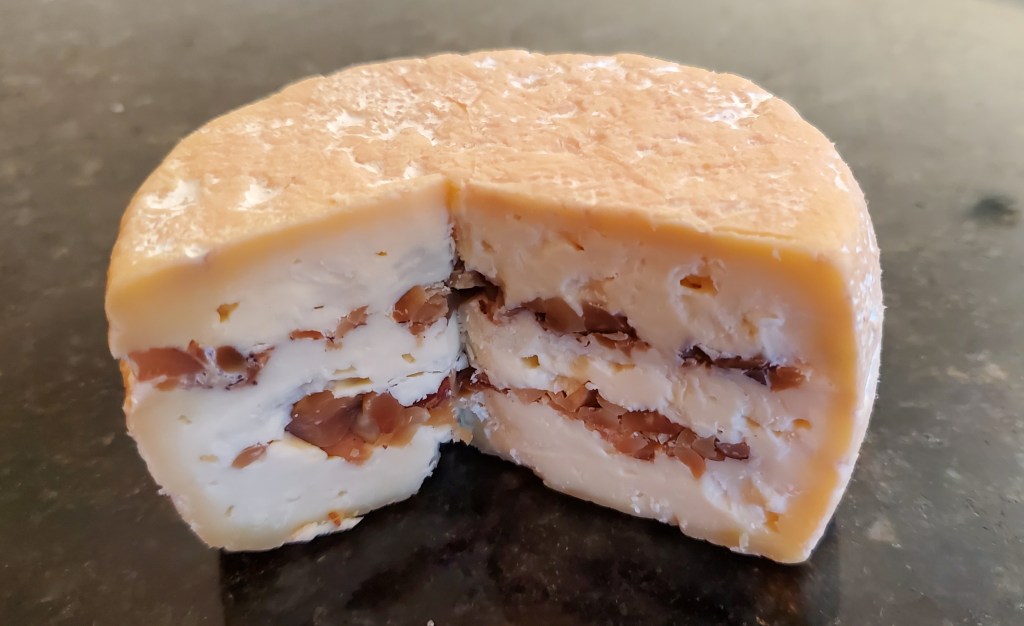
Photo: Frangelico-washed hazelnut cheese (Lisa Caywood)

Non-Curdverse music via Wikimedia:

Stars and Stripes

Manic Polka

Waltz of Treachery

Ep 9: Cheeses of the Season – The Girls of Summer

Summer is prime cheesemaking season in much of the northern hemisphere! In this episode we talk about milk seasonality, transhumance–and pigs!

Sources and resources

Ep 5: Cheeses of the Season – Spring

Kingdom of Salt: 7000 Years of Hallstatt, Kern, Kowarik, Rausch and Reschreiter, eds; 2009

French Salers Production Halted Due to Drought

Read about modern transhumance practices in the Swiss Alps

Read about transhumance practices in the Caucasus

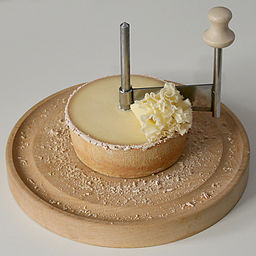
Image: Tête de Moine cheese with girolle, source Wikimedia

Bloomy Deep Dive: Traditional Camembert

Here’s a lovely video about how traditional Camembert is made, which very nicely illustrates a number of the things I talk abt in Episode 7.

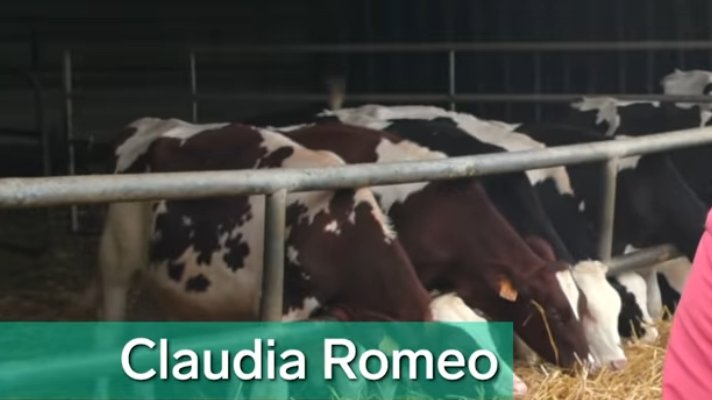
One thing I didn’t specifically mention is that as with many cheeses, the AOP version must be made with milk from a specific breed, in this case the Normande cow. You can see some in the background at :13: mostly white with dark red splotches.

The Normande breed produces high protein, high fat milk–4.4% fat on average, vs 3.25-3.5% from the typical Holstein.

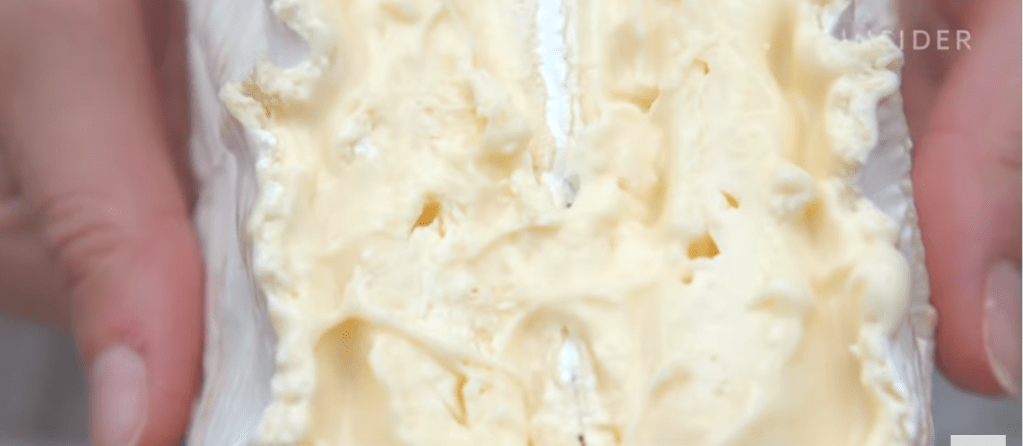
At 1:17 we get our first glimpse of the interior of a traditionally made bloomy rind. Unlike the stabilized paste cheeses typically available in supermarket, the texture is not even throughout the cheese. That’s because it ripens from the outside in.

At 1:35 the maker talks about the “croûte fleurie” of the cheese. That literally means “flowering crust”, referring to the fruiting of the geotrichum & penicilllium fungi on the rind. The slightly more indirect translation in English is “bloomy rind”.

Fun side fact for those who don’t speak French: that little “hat” mark over the U in croûte is called a circumflex, and it marks where there USED to be an S, which at some point stopped being pronounced in French, and then much later orthography caught up with pronunciation. We often have the same word, with the S, both in writing and in speech, in English: croûte = crouste = crust.

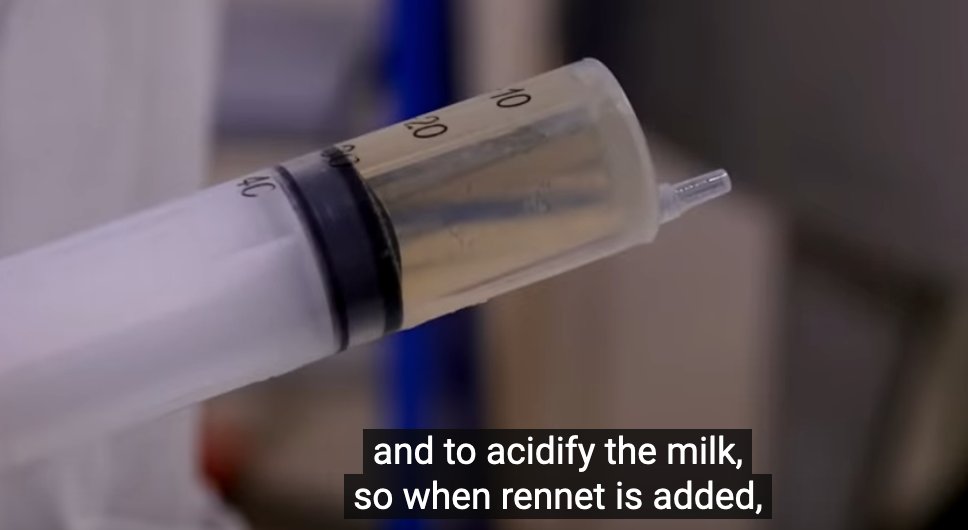
In the podcast I mentioned that most of these bloomies were originally farmhouse cheeses, things that didn’t require a lot of hands-on work that would tie down the farmwife (typically) as she ran around taking care of all of the OTHER business of running a farm & household. So a lot of these cheeses are traditionally made from raw milk that’s just left to sit around and acidify on its own for 12-24 hours. (Longer if it’s cooler, less time if it’s warmer.)

Discussion of acidification process above

Some bloomies are entirely lactic set with very little rennet–many of the goat cheeses, and also Brie de Melun. Others, including most other types of Brie and also Camembert, get more rennet added (as at 2:29) for a bit more structure to the curd.

Note that the raw milk is never heated: it just comes out of the animal and is left to sit in buckets or forms as it acidifies. The French often categorize cheese by dividing them into “cooked” and “uncooked” cheeses for this reason, and then “pressed” and “unpressed”.

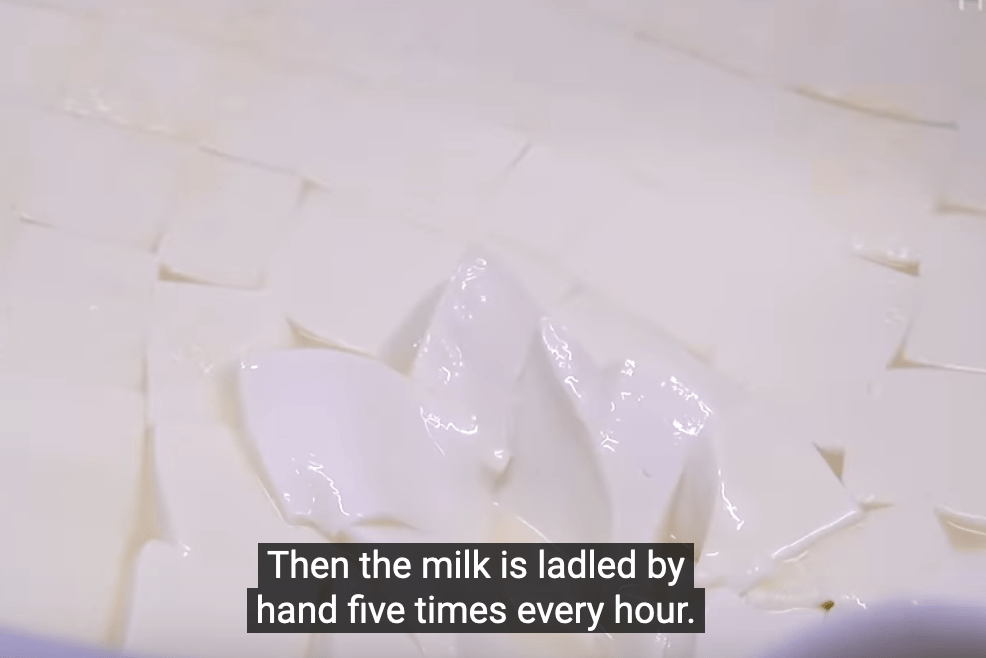
At 2:32 we see the curd being cut into quite large chunks. This allows the curd to retain a lot of liquid, which will help it break down quickly over a few weeks.

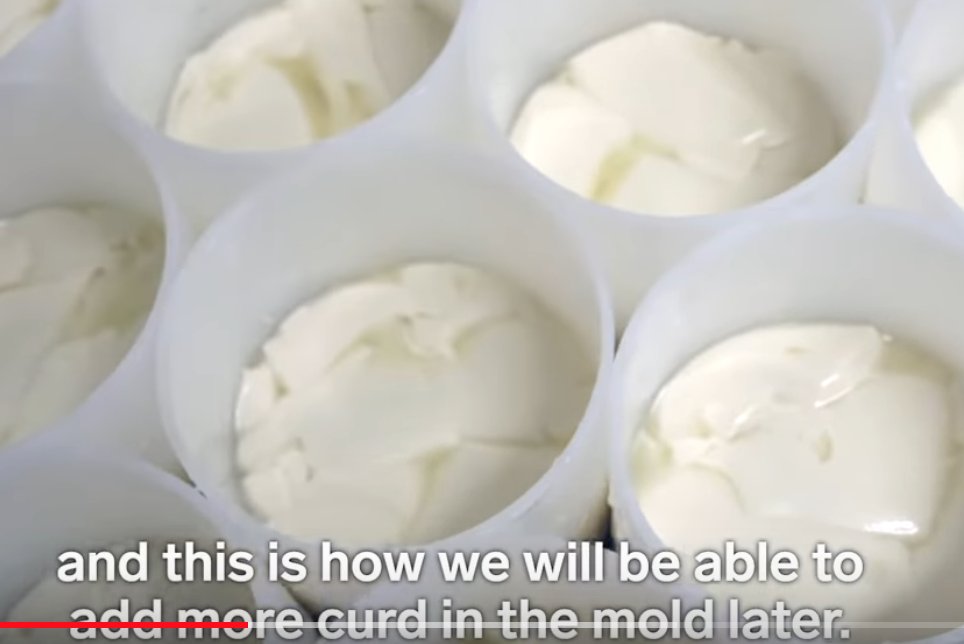
The curd is barely stirred, if at all, so it hardly retains its shape as it gets ladled into molds. As the maker notes at 2:42, each layer of ladling (one ladle per hour into each mold) condenses from a full mold into a thin layer over an hour, as the fragile curd blocks quickly collapse. Camembert molds are simply round cylinders with holes on the sides and no bottom. The whole goal is to allow the whey to drain out without any impedance.

Here you can see the curds collapsing and flattening as they shrink down into the mold.

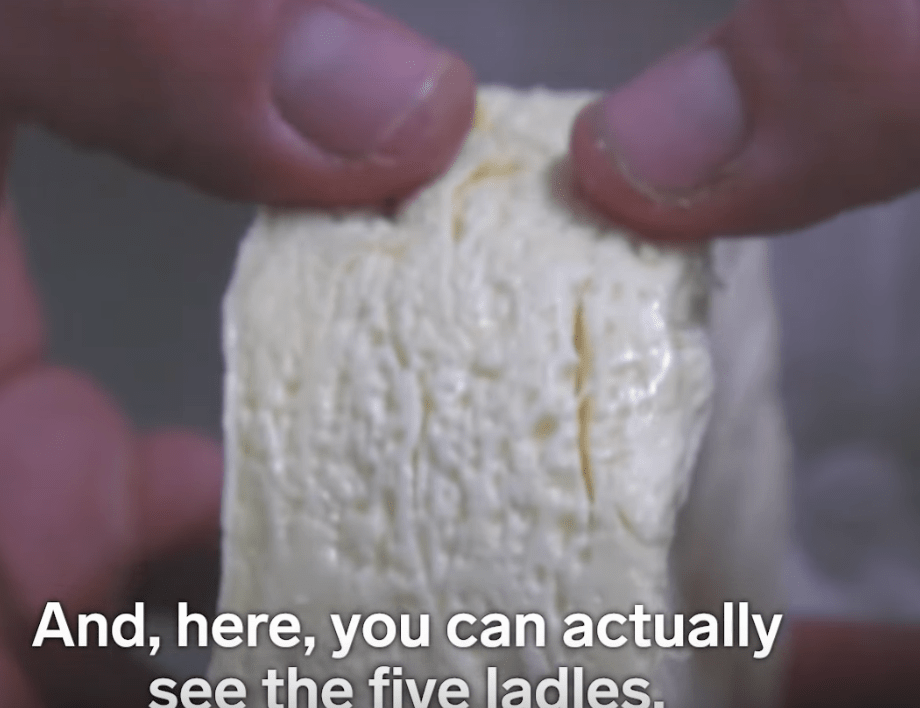
In case you’re wondering, yes, a little bit of a skin does develop on the top of each layer during the hour between ladlings, as the top portion, exposed to the air, dries out a bit. At 3:33, the maker pulls on the sides of a day-old cheese to show how the layers can be seen. The cheese is unpressed other than with the weight of new curds being added on top of others, so they aren’t tightly knit together.

At this point it should become clear that this approach, while wonderfully low-key from the point of view of someone with a million other things to do in a day–18-24 hours to acidify, another 30-45 minutes to coagulate, 5 hours to mold, just stopping by every now and then and then going on about other business–is completely antithetical to mass production, where high throughput is king. So mass-market cheeses are made with lots of added cultures to jumpstart acidification; the molding/draining process is also done at a warmer temperature, so curds drain faster. It’s the opposite of “low ‘n slow”.

Around 3:45 they talk about the aging time, 4-5 weeks, which allows the fuzzy white molds (fungi, really) to grow in on the surface and then work their way into the curd. Here you can see cheeses a week or so old, when the rind is just partially grown in. It comes in patchily at first, then starts to spread until you get a fairly even coat.

The maker mentions at 3:57 that they add geotrichum and penicillium. Sometimes freeze-dried spores are added to the milk as it’s acidifying; in other cases, especially large productions, they can be added to brine that is sprayed on the surface of the cheese after it’s made. Because there’s less of the fungi active in the curd, this enables the producer to have a nice traditional-LOOKING cheese, but less outside-in aging, which would produce a less even texture.

Towards the end of Ep 7 I talk about how to select a cheese in the supermarket. One thing to look at is the evenness of the rind. Some bloomies are sold, honestly, too young, and never really soften well in your fridge. Others, especially imported ones, are often older than ideal. You can decide for yourself what the sweet spot for you is, depending on how quickly you eat your cheese. If it’s for a party tomorrow, buy an older one. If you just have a few slices every few days, buy a younger one.

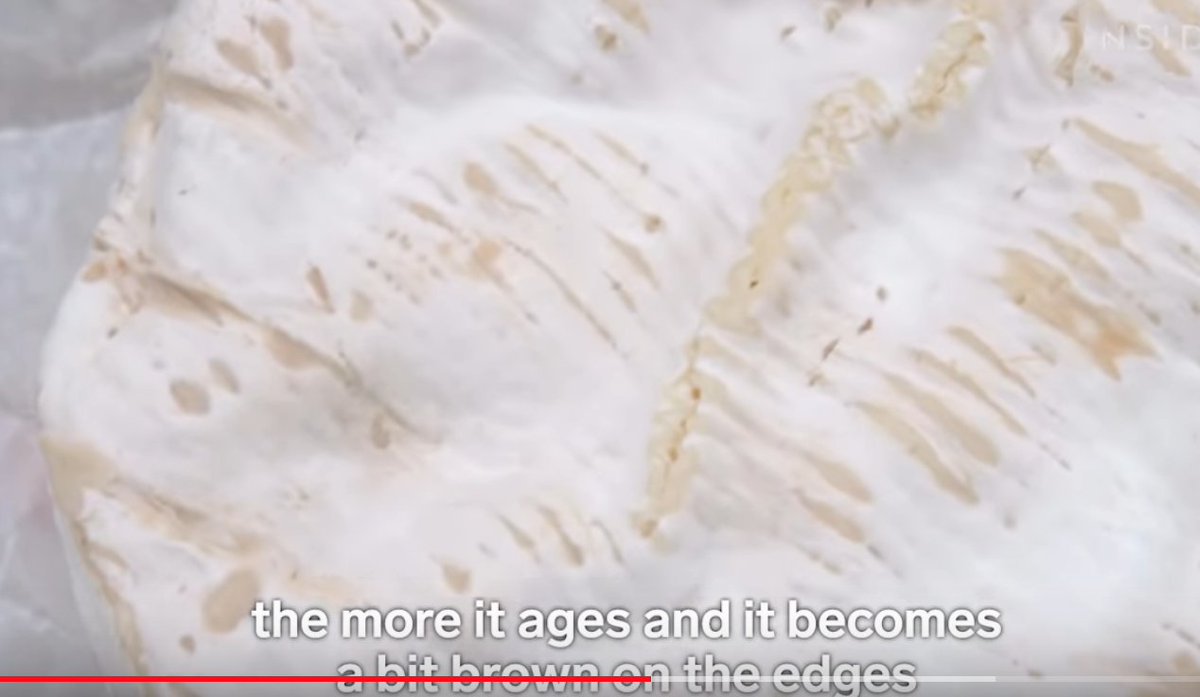
At 4:06, we see how in older cheese starts to develop “bald” spots, where a beige rind starts to show through.

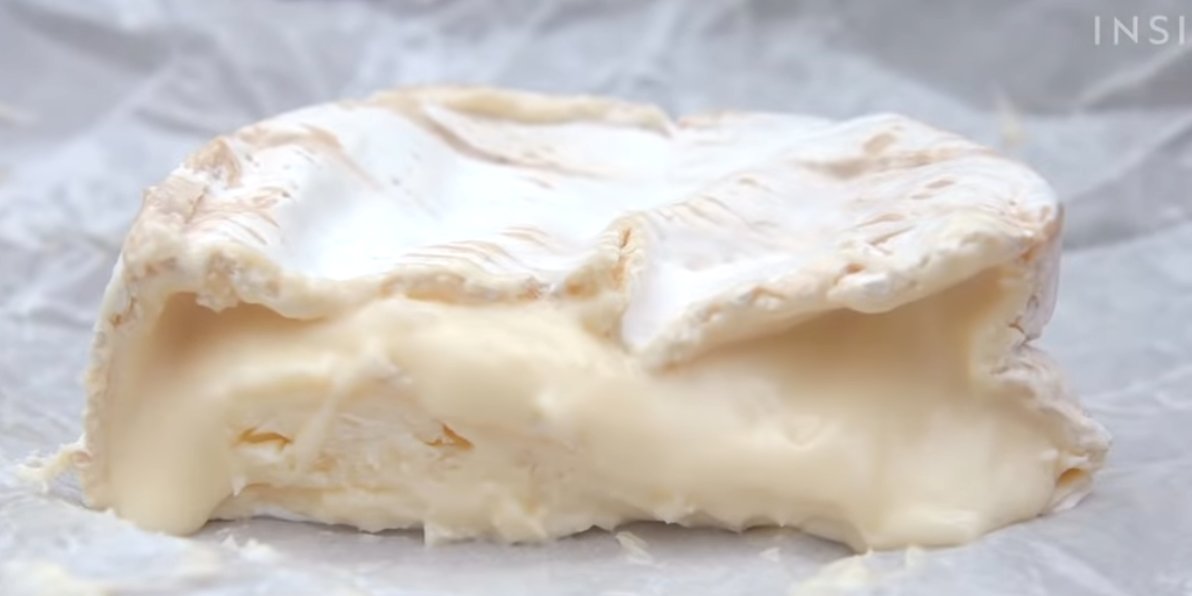
At 4:10 we get a closer look at the inside of a traditionally ripened bloomy: crust about the texture of wet cardboard, oozing paste just inside it (called the “cream line”) and then a still-firm, cakey-textured center.

This is obviously quite different from the stabilized-paste bloomies we typically get in supermarkets. I talk about how stabilized paste is different in virtually every aspect of how it’s made towards the end of Ep 7.

So if you see something with these multiple textures, you’re getting a cheese made fairly traditionally–but you’ll want to eat it quickly. If it’s uniformly firm, with no “squish”, it’s a stabilized-paste and either extremely young, or one of the brands that never really softens.

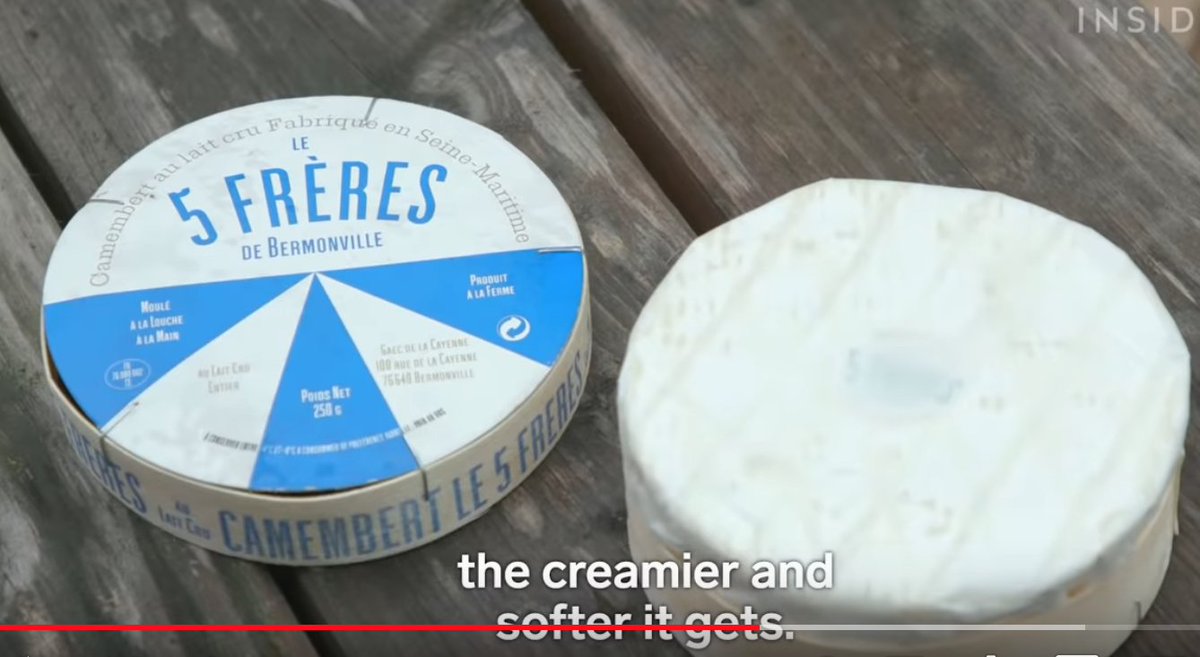
Around 4:33 the maker talks about the traditional wooden box in which Camemberts are often sold: it helps the cheese keep its shape as it softens and ages, and protects it from getting squished during transport.

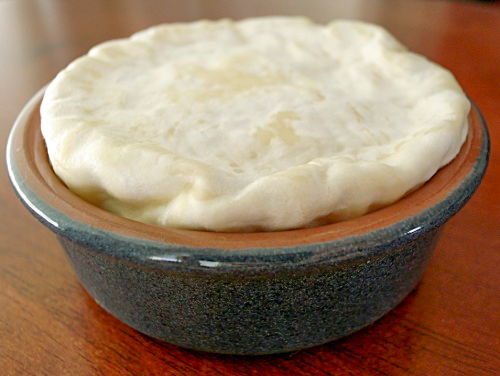
A number of soft-ripening cheeses are packaged this way, in fact…St Marcellin, a bloomy with a very thin rind, is often packed in small ceramic pots because it gets runny so easily.

Source

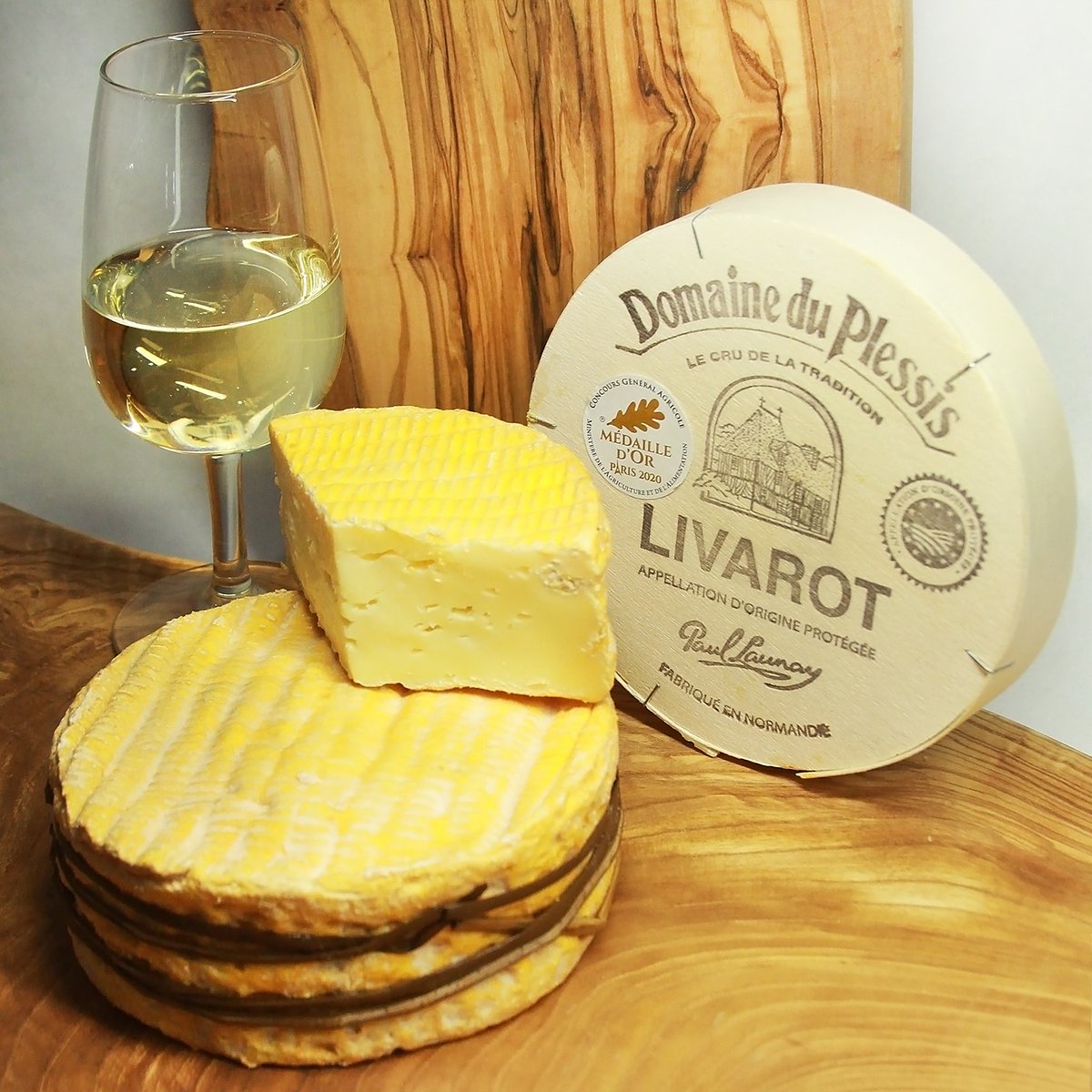
Livarot, another Norman cheese (washed rind, not bloomy) that’s probably older than Camembert, is taller and traditionally tied twice around with raffia to help it hold its shape.

Source

Around 7:11 they mention that most of the Camembert made today is made with pasteurized milk. Only ~10% of Camemberts are made the way we’ve just seen, with raw milk. Because of the very long production time for the traditional approach the AOP label is extremely important commercially for small, traditional producers–it allows them to differentiate their product and maintain a price premium that allows them to stay out of the red financially.

The label, however, is a subject of much controversy, as the government has broadened the label in different ways several times. Here’s a discussion of one of the more recent contretemps…which, because it’s France, led to protests that included traditional Camembert cheeses being dropped in MPs’ letterboxes.

All of this is neither here nor there for those of us in the US, since 4-5 week old, raw milk cheese can’t be imported here. But if you’re touring around France, enjoying Euro-dollar parity, you may wish to look for “fermier” on the label in a proper cheese shop to get the full flavor experience of a traditionally made Camembert.

Originally tweeted by IntoTheCurdverse (@curdverse) on July 17, 2022.

Honey-Rubbed Montasio

About six weeks ago, I started a Montasio, a mountain cheese from the Veneto-Friuli region of NE Italy.

I’d made it before, a very long time ago, and found it uninteresting, so I didn’t make it again. But! I came back to it last month because of a somewhat unusual finishing technique it sometimes receives: it’s coated with a few layers of honey in the early stages of aging. And I got this really interesting desert wildflower honey when I was in New Mexico that I thought would be great with the slightly nutty flavor of this cheese.

Let me explain about the honey.

Honey GIF

There are a number of long-aging cheeses where you oil the rind, creating an anaerobic barrier between the actual cheese surface and the surrounding air to help ward off molds.

Honey does the same, but it's got some even more interesting things going on:

Honey is pretty acidic. Actual pH varies quite a bit, but average in the upper 3s and low 4s. That makes for a pretty unfriendly surface for acid-sensitive microbes, yeasts and molds, of which there are many. You may have heard of honey being used on diabetics’ foot injuries; the combo of oozy spreadability (easy to get into small nooks and crannies)the acidity, and the anaerobic nature of the substance all make it a great way to seal off wounds from harmful microbes.

Now here’s the interesting thing about honey-rubbed Montasio: the first records of it come from a Benedictine monastery in the 13th c. That’s not to say that it didn’t exist before then, by any means. But it’s often aged for a really long time, and especially before the modern era, the people who had the real estate to age things for months or years, in the forms of caves & cellars, were the nobility and the Church. It’s why certain monastic orders are known for wine, cheese and beer: these were major sources of income for monasteries, which were often expected to be financially self-sufficient.

Honey, prior to the introduction of sugar cane & refined sugar from the Islamic world in the late middle ages, was pretty much the only source of sweetness in Europe. And it was a luxury item.

So guess what another major source of income for large manorial & monastic estates was? Honey.
So our Benedictine friends in NE Italy evidently had not only livestock, but also beehives. You can absolutely age Montasio without honey–oiling it, for example. But you might imagine that just like any modern enterprise, they may have had several different models in their product line, and the honey-rubbed version may have been the top of the line.

Some sources I've read also say Montasio was originally a sheep-milk cheese, or sometimes mixed-milk, but commercial versions I've seen, at least in the US, are all cow milk. So I'm making cow today. I may make it again with sheep milk some other time.

This is a fairly straightforward thermophilic cheese: heat the milk to 95F, add cultures, let them “ripen” or acidify the milk for 30 minutes, then add rennet and let it coagulate for another 30 minutes.

Also as it common with thermophilic cheeses, because you want to let a lot of the whey out, you cut the curd pretty small, .5cm. Then you cook them some more by slowly heating them to 110F over 30 mins, stirring slowly all the while.

After that, I turned off the heat and let the curds sit in the hot whey for another 30 mins, stirring every few mins, until the outsides were quite dry and not sticking to each other, and the individual curds were quite springy instead of squishy. Rubber band consistency.

Once the curds are cooked to the right consistency, you drain them and then press at about 20 lbs for an hour. Then lip the disc and press them for another 30 mins at 30-35 lbs, keeping them reasonably warm, 75-80 F, while they knit. The heat helps with the knitting process. The final weight of ~45 lbs stays on overnight.

Two other recipes for Montasio I have call for salting the curds before you put them into the press, which largely stops acidification. This one acidified for basically 18 hrs before I brined it the following morning.

Those other recipes also use 4-8x as much culture as this one. 🙂 So this is the very definition of low & slow fermentation. I’ve been liking the results of the low & slow approach better, which is why I opted for this one.

This is the baby Montasio just after being turned in its brine; it was there for a total of ~8 hrs. The final cheese is a bit salty, so I might do it for a shorter period of time next time.

After a couple of weeks of aging in the cave, the rind is fairly solid but not yet growing mold. That’s when the honey went on, 3 coats in all, drying for a day or so in between.

The honey is one I picked up on a trip to New Mexico. The Santa Fe Honey company is run by an extended family who has some 200 hives around the state. The majority are in the Rio Grande Valley, but some (like this one) are from the high desert and mountains. It’s got a dark caramel flavor with a hint of sage.

After a total of 6 weeks of aging, I can say that this Montasio is definitely better than the other ones I’ve made—mostly due to the milk, I think.

The last two I made were with standard supermarket milk and had that one-note sharpness of a lot of mass-market harder cheeses. This one is from raw Jersey/Brown Swiss milk, and has a richer, more buttery flavor. The honey on the rind isn’t really noticeable on its own, but if you eat slowly you get hints of the dark caramel along with the butter. It’s a fairly salty cheese, more than it is a sharp one.

Adding a dab of that same desert honey on a slice of the cheese makes all the flavors really bloom.

Ricotta2 Electric Boogaloo: Whey Ricotta

This one goes out to the yogurt and paneer makers, having been prompted by an exchange over on Twitter with a friend who had questions after reading the last blog on ricotta. It illustrates really well the core of all dairy product making: acid management.

Twitter friend: I’ve done quite a few batches of “ricotta” using the whey from Greek style yoghurt (and maybe adding am extra liter of whole milk). That whey makes almost bypasses the need for any extra acid to be added. What do you think?

It’s very possible to make ricotta from whey without adding more acid, because the whey is already somewhat acidic. Exactly how acidic will vary from one type of yogurt or cheese to the next, and also how long it’s been sitting around (the sugars in the whey continue to get converted to acid over time).

The acidity of the whey actually matters quite a bit–if the whey is still relatively “sweet”, say ~6.4 pH (fresh milk is ~6.6), you’ll still need to add acid. As it drops, less acid will be needed. There’s a good outline here.

On the other hand, if the whey is TOO acidic, the remaining solids won’t really coagulate. This is why you won’t get satisfactory whey ricotta after making an acid-coagulated cheese (eg paneer)–because the whey is already too acidic. At best, you’ll get a sort of dairy sludge if you strain the whey through cheesecloth. I’ve done this, and made a cheese spread with it, but it’s very dense, not light and fluffy like good ricotta.

You can counteract the high acidity of whey by adding more fresh milk to the pot to get the overall acid level back up above 6.0. Recipes specifically written for whey ricotta pretty much always include this step prior to adding acid, though the amount of milk you’ll be told to use again varies widely–often a couple of cups (1/2 a liter) to a gallon (4 liters) of whey, up to 50% of the current volume of whey. That’s because the acidity of the whey you happen to have could fall within a very wide range, and they’re trying to make it foolproof for you.

All of this assumes your whey is somewhere near 6.0 pH. The more acid (lower pH) it gets, the more likely you’ll be adding whey to a pot of fresh milk rather than the other way around.

If you don’t happen to have a foodsafe pH meter (I don’t), you can gauge acid levels very roughly by taste (below is courtesy of cheesemaking.com):

  • pH 6.2-6.5 the curds and whey should taste sweet like milk
  • 5.8-5.7 the curds will still have a slight sweetness but nearing neutral*
  • 5.5-5.4 they will taste neutral, neither sweet nor acid.
  • 5.2-5.3 a slight acid tang develops
  • 5.1-4.9 a definite acid tang
  • 4.7-4.4 and below the taste begins to have the tang of a euro style yogurt

*Note that different milk types such as goat and sheep taste different, and typically not quite as sweet as cow, when they’re fresh. So you need to know what the fresh milk of the kind you’re using tasted like in order to use this as a guide.

You can also buy foodsafe pH strips from a variety of online sources including Amazon, and those are pretty easy to use. The most useful ones test for a relatively narrow pH band (say 7.0-4.0), mainly because the color guide they give you to compare the test strip against will show finer .x gradations.

None of this examination of pH levels is in any way REQUIRED to make whey ricotta, so definitely don’t let the preceding few paragraphs scare you off. Just find a whey ricotta recipe, add some milk unless the whey is already really cloudy, however much acid they tell you, and off you go.

But if you’ve attempted whey ricotta and you’re not getting satisfactory results, now you can make better guesses as to why.

Tangent alert!

Traditional Greek yogurt is made from sheep milk, not cow milk, and often isn’t strained at all.

How does it get so thick? Sheep milk has a lot more solids in it than cow milk does: more than twice the amount of fat (7+ % vs 3.25-3.5%), and nearly twice as much protein. With all those solids, it really doesn’t take much at all to get them to find each other and link up in a coagulated mass. You’ll find if you work with sheep milk that you’ll get nearly twice as much curd as you would with the same amount of cow milk.

And if you eat a whole pot of sheep yogurt for breakfast, you’re unlikely to need lunch. I speak from personal experience here.

My First Cheese(TM): Ricotta

Play kitchen (via Wikimedia)

One of the most common questions I get when I mention I make cheese is “Wow, I’d love to make cheese! What should I start with?” to which the best answer is pretty much “ricotta”, or if you have a Central European grandparent, “pot cheese”.

Here’s why:

  • Ricotta is nearly foolproof and doesn’t require any special equipment.
  • Homemade ricotta is obviously different from and better than commercial ricotta–no weird, pithy texture, no stabilizers, just soft, pillowy goodness. Quick, easy wins are good when you’re a complete n00b–they give you the boost of confidence and interest to keep going.
  • Making a batch of cow ricotta and another from goat milk (and sheep, if you can get it) is a great way to get a sense for the differences between different milk types. There are flavor differences, as I mentioned in my post on Pecorino, but they also coagulate differently and you’ll get different amounts of ricotta from the same amount of milk. The size and texture of the curds will be different. These are all useful things to get a feel for before you start playing around with other, more complicated types of cheese.

You’ll find the ricotta recipe near the beginning of pretty much every cheese cookbook, and there are hundreds of recipes for making it all over the Internet. And therein lies the rub: the myriad different recipes vary wildly, which can be pretty overwhelming and confusing for someone who’s just trying to figure out where to start.

The good news is, they’ll all work, just with slightly different results.

Let’s start with the basic ingredients:

Milk. The level of milkfat in the pot affects yield. You can use either 2% or whole milk, both will work. You’ll just get a lower yield with 2% and of course it will have a less creamy mouthfeel.

The milk can be raw or pasteurized. It absolutely doesn’t matter. You’ll be blowing past pasteurization temperatures on your way to making ricotta in any case, so don’t go out of your way to pay extra for raw milk. Pasteurization is a function of both temperature and time, and the relationship is not linear. Here’s the time-temp scale for pasteurizing milk:

  • Low-temp or vat pasteurization: 145F (63C) for 30 minutes
  • High temp, short time (HTST): 161F (72C) for 15 seconds
  • Higher heat, shorter time (HHST): 191F (88C) 1 second

When you make ricotta, you’ll be heating the milk to ~195F and holding it there for 10-20 minutes. So if you come across that recipe from that guy who tells you to get raw milk and then pasteurize it for 30 minutes before you continue with the recipe, ignore him and absolutely anything he says on the subject of milk or cheese forever.

Cream? Many recipes will tell you to add cream to the milk. The proportion of cream to milk ranges from 1/4 cup to 1 gallon, to (in one remarkable recipe) 2 cups of cream to 4 cups of milk. At that point you’re halfway to cream cheese, but hey, go for it if that’s what you want. You don’t actually need to add cream at all if you don’t want or don’t happen to have any on hand. Remember that ricotta is often made from whey left over from making a batch of cultured rennet cheese, from which most of the solids, both fats and proteins, have been removed. And you can make ricotta with 2% milk. Cream is just about yield and mouthfeel.

Note I’ve been noticing a number of brands have started adding carrageenan or other gums to cream to make it appear thicker when poured. I’ve even encountered it in one brand of goat milk. So, weird as it may seem, make sure to look at the ingredients list for your milk and cream. It should be just milk or cream, nothing else.

Incidentally, cow milk is the only kind from which the cream separates out easily. So your options when making goat ricotta are either (a) don’t worry about adding any cream–goat milk is higher in fat than cow milk anyway, or (b) add cow cream. Especially if you’re making goat ricotta for the purpose of seeing how it’s different from cow ricotta, I advise A. Sheep milk? It’s got twice as much fat as cow milk. Don’t even think about adding cream.

Acid There are range of options here: citric acid, lemon juice and white vinegar are the most common. I linked to a recipe using white vinegar in the post about Pecorino simply because it’s something that most people have ready access to, and the acidity levels are pretty uniform across brands. You can also use buttermilk.

By now it should be pretty clear that there’s a huge amount of room for experimentation.

Things most recipes don’t tell you, but which are actually fairly important:

Stirring technique Stir up and down, in a ferris wheel motion, not in a horizontal circle. Milk scorches easily, and you want to keep the temperature even from the top to the bottom of the pot. The larger the volume of milk you’re working with, the more important this is. A flat skimmer is an ideal implement, but any large, fairly flat spoon will work, or even a potato masher.

You can make two batches. If you’re starting from milk and not whey, the first application of acid will loosen the bonds that keep the solids in solution, but once you skim out the curds, you’ll still have a fairly cloudy whey in the pot. Add a second batch of acid and wait another 10-20 mins. You’ll typically get a larger yield from the second batch than the first, though it will be slightly lower in fat. (Some people add an extra cup of milk or 1/4-1/2 c of cream to the pot before adding the second batch of acid for this reason.) Just mix it in with the first batch after it’s drained.

Draining Cheesecloth isn’t always easy to find in your average supermarket. Sometimes you’ll find it in the section with cooking utensils. But you can easily order some from Amazon (Grade 90 or 100 is fine). You can also use a clean linen towel (flat weave, not the bumpy ones) or cut a square from an old all-cotton sheet or pillow case a bit larger than your colander. Boil it before you use it to sanitize it, and make sure it’s wet before you put the curds in it so they don’t stick to it. After you’re done, rinse any clinging curds from the cloth with COLD water (hot water will make them stick harder). And then you can just throw it in the wash with other clothes and some chlorine bleach for next time.

Then give Ep 2 (the overview of cheesemaking) another listen, and see how it hits after you’ve done it once.